Corpus from a Crucifix (c. 1130–1140): Art, History and Details
Corpus from a Crucifix at the Cleveland Museum of Art: c. 1130–1140, polychromed wood. Explore the work's context, creator attribution and collection history.
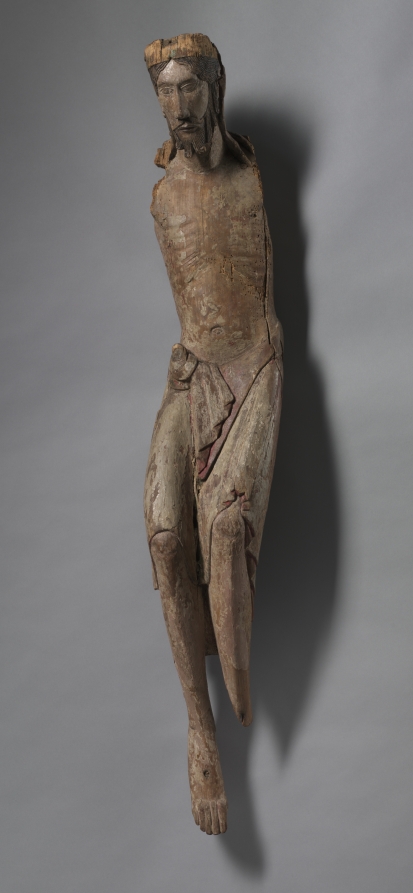
Corpus from a Crucifix (c. 1130–1140) is in the Cleveland Museum of Art collection.
The work and its context
The museum's open-access catalogue describes the work:
By the 11th century, monumental crucifixes carved from wood and painted were a common feature of church interiors. Placed on or suspended above the main altar, they reminded viewers of Christ’s sacrifice on behalf of mankind at the Crucifixion, an event reenacted every time Mass was celebrated on the altar below. Crucifixes also invited prayer and meditation on Christ’s role as Redeemer. This fragmentary but finely carved corpus, or body of Christ, once belonged to such a crucifix.
Object facts
- Title: Corpus from a Crucifix
- Date: c. 1130–1140
- Culture: France, Burgundy, Autun?, 12th century
- Type: Sculpture
- Technique: polychromed wood
- Dimensions: Overall: 111.1 x 20.2 x 7.8 cm (43 3/4 x 7 15/16 x 3 1/16 in.)
- Collection: MED - Gothic
- Department: Medieval Art
- Accession number: 1980.1
Collection credit
Leonard C. Hanna Jr. Fund
Further reading listed by the museum
- Cahn, Walter, and Linda Seidel. Romanesque Sculpture in American Collections. New York: B. Franklin, 1978.
- Sotheby's (Firm). Medieval Works of Art; Late Gothic Wood Sculpture; Renaissance Bronzes; a Collection of Caskets, Locks and Keys. 1979.
- Parke-Bernet Galleries, and Sotheby & Co. (London, England). Art at Auction: The Year at Sotheby Parke Bernet 1979-80 ; Two Hundred and Forty-Sixth Season. London: Published by Philip Wilson Publishers Ltd. for Sotheby Parke Bernet Publications, 1980.
View the collection record
See the museum's photographs and full catalogue entry. Catalogue text is reproduced from the Cleveland Museum of Art's open-access data, with HTML formatting removed. This object and its supplied image are designated CC0.
Sources
More in Lifestyle
Keep reading