Cosmetic Jar in the Form of the God Bes (664–525 BCE): Art, History and Details
Cosmetic Jar in the Form of the God Bes at the Cleveland Museum of Art: 664–525 BCE, Egyptian blue. Explore the work's context, creator attribution and collection history.
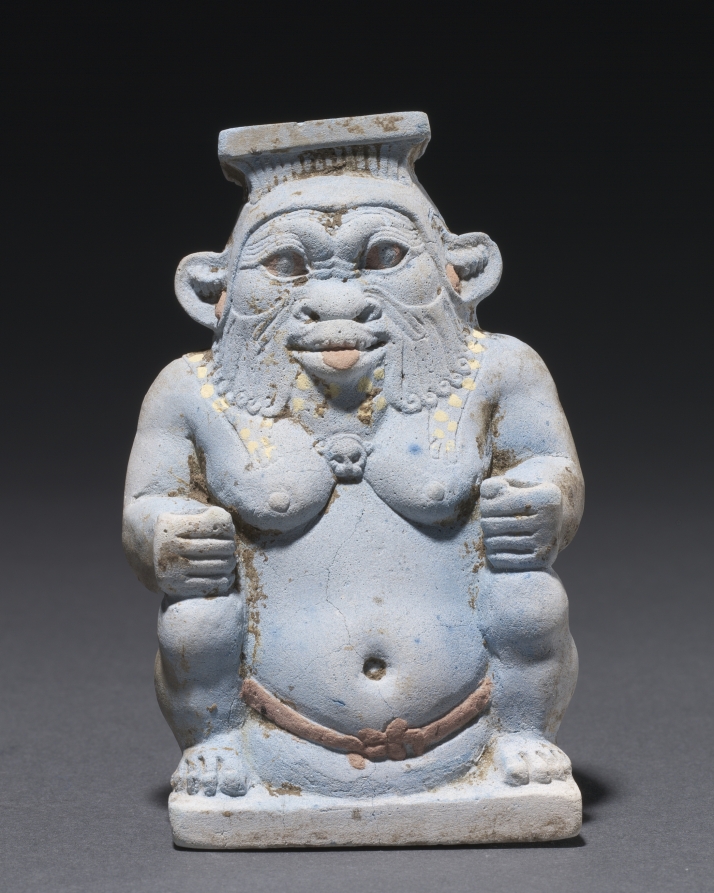
Cosmetic Jar in the Form of the God Bes (664–525 BCE) is in the Cleveland Museum of Art collection.
The work and its context
The museum's open-access catalogue describes the work:
Both ancient Egyptian men and women loved cosmetics. Unguents, oils, and perfumes made from aromatic plant resins and gums were obtained at great cost from distant lands. The objects identified with cosmetics were given lavish treatment. The god Bes, patron god of cosmetics, is the subject of this colorful jar.
Object facts
- Title: Cosmetic Jar in the Form of the God Bes
- Date: 664–525 BCE
- Culture: Egypt, Late period (715–332 BCE), Dynasty 26
- Type: Vessels
- Technique: Egyptian blue
- Dimensions: Overall: 9.3 x 6.1 x 4.1 cm (3 11/16 x 2 3/8 x 1 5/8 in.)
- Collection: Egypt - Late Period
- Department: Egyptian and Ancient Near Eastern Art
- Accession number: 1995.13
A detail from the museum
Bes was the Egyptian god of many things, including cosmetics, war, and childbirth.
Collection credit
Purchase from the J. H. Wade Fund
Further reading listed by the museum
- Kozloff, Arielle P. "Blue Bes," Cleveland Museum of Art Members Magazine 36, no. 1 (January 1996).
- Friedman, Florence D., Georgina Borromeo, and Mimi Leveque. Gifts of the Nile: Ancient Egyptian Faience. New York: Thames and Hudson, 1998.
- Griffin, Patricia. "Faience: A Lost Art." Cleveland Art: Cleveland Museum of Art Members Magazine 38, no. 5 (May 1998): 8-9.
View the collection record
See the museum's photographs and full catalogue entry. Catalogue text is reproduced from the Cleveland Museum of Art's open-access data, with HTML formatting removed. This object and its supplied image are designated CC0.
Sources
More in Lifestyle
Keep reading