Covered Bowl (Écuelle) (c. 1755): Art, History and Details
Covered Bowl (Écuelle) at the Cleveland Museum of Art: c. 1755, soft-paste porcelain with enamel decoration. Explore the work's context, creator attribution and collection history.
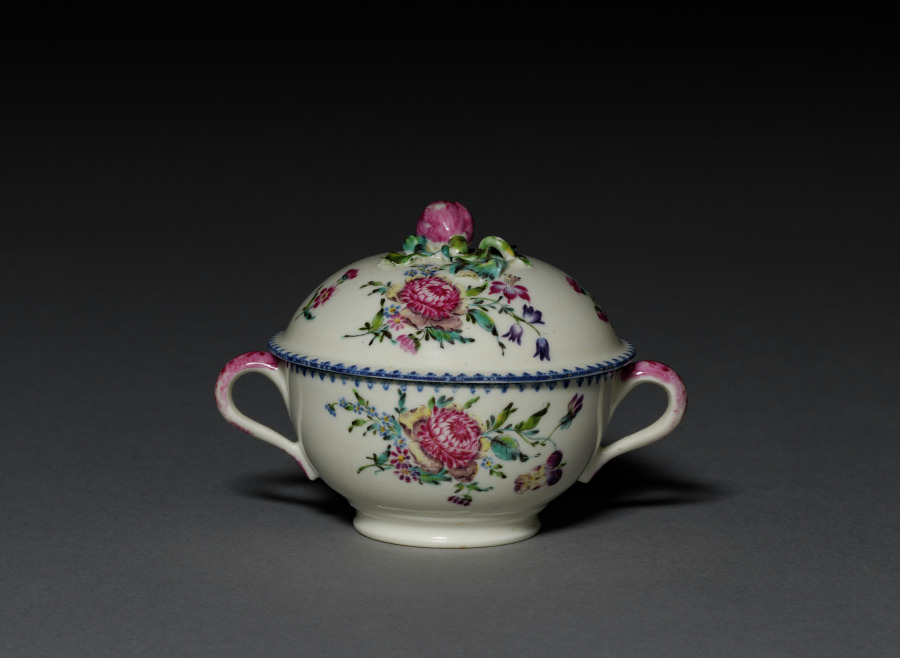
Covered Bowl (Écuelle) (c. 1755) is in the Cleveland Museum of Art collection. The museum's creator attribution is Mennecy Factory (French).
The work and its context
The museum's open-access catalogue describes the work:
Members of the 18th-century French social elite would participate in a lengthy ritual of washing and dressing called the toilette. Along with hair and make-up, this process, which bordered on performance, would also leave time to eat. Small, two handled bowls like this one were used for broths or soups consumed by an individual in the bedroom or boudoir.
Object facts
- Title: Covered Bowl (Écuelle)
- Date: c. 1755
- Creator attribution: Mennecy Factory (French)
- Culture: France, Mennecy, 18th century
- Type: Ceramic
- Technique: soft-paste porcelain with enamel decoration
- Dimensions: Overall: 9.9 x 13.1 cm (3 7/8 x 5 3/16 in.)
- Collection: Decorative Arts
- Department: Decorative Art and Design
- Accession number: 1961.9
A detail from the museum
The name éceulle originates from the oak, or esculus, that was used to make early medieval bowls of a similar shape.
Collection credit
The Norweb Collection
Further reading listed by the museum
- Hawley, Henry. "Ceramics of the Rococo Age." The Bulletin of the Cleveland Museum of Art 48 (March 1961).
View the collection record
See the museum's photographs and full catalogue entry. Catalogue text is reproduced from the Cleveland Museum of Art's open-access data, with HTML formatting removed. This object and its supplied image are designated CC0.
Sources
More in Lifestyle
Keep reading