Crossbow Fibula (c. 350–400): Art, History and Details
Crossbow Fibula at the Cleveland Museum of Art: c. 350–400, bronze, gilt-bronze, silver, and niello. Explore the work's context, creator attribution and collection history.
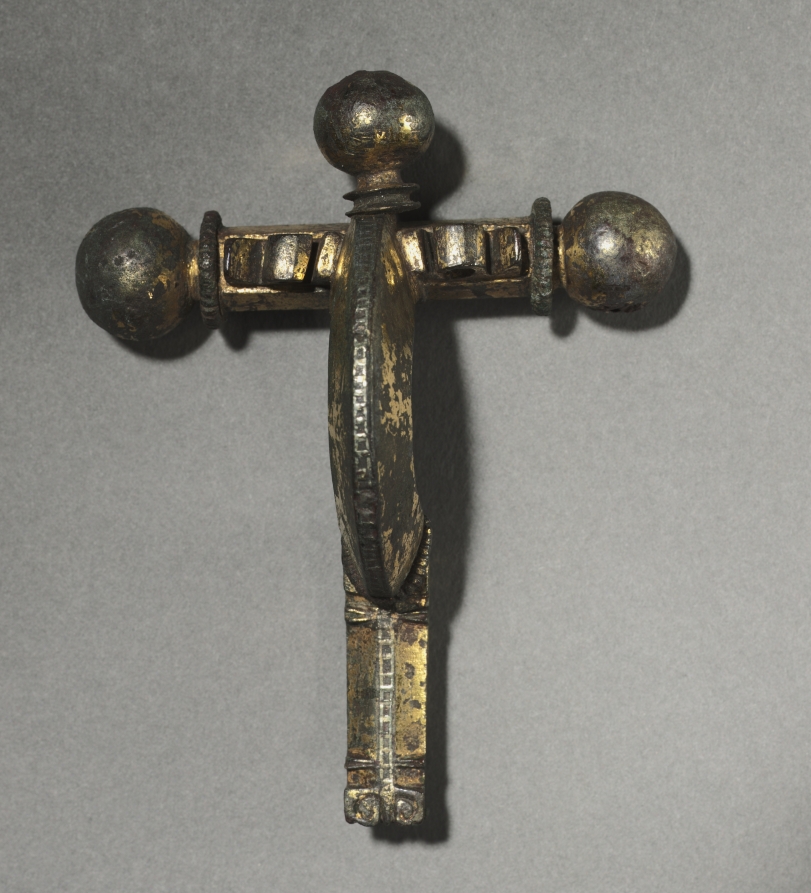
Crossbow Fibula (c. 350–400) is in the Cleveland Museum of Art collection.
The work and its context
The museum's open-access catalogue describes the work:
A fibula was a garment clasp that functioned somewhat like a modern safety pin. Since buttons were not used in antiquity, fibulae were used to keep a cloak closed. They were worn by both men and women, commonly on the right shoulder, and produced in various sizes and shapes. Because they were highly visible accessories, they often received decorative gilding, inlay decoration, or "onion"- shaped domes. Crossbow fibulae were introduced by the Romans and are named for their resemblance to the weapon. Decorative and technical features of this group suggest they may have been made in Roman-occupied Britain.
Object facts
- Title: Crossbow Fibula
- Date: c. 350–400
- Culture: Gallo-Roman or Romano-British, Migration period, 4th century
- Type: Jewelry
- Technique: bronze, gilt-bronze, silver, and niello
- Dimensions: Overall: 8.6 x 7 cm (3 3/8 x 2 3/4 in.)
- Collection: MED - Migration Period
- Department: Medieval Art
- Accession number: 1930.225
Collection credit
Purchase from the J. H. Wade Fund
View the collection record
See the museum's photographs and full catalogue entry. Catalogue text is reproduced from the Cleveland Museum of Art's open-access data, with HTML formatting removed. This object and its supplied image are designated CC0.
Sources
More in Lifestyle
Keep reading