Crucified Christ (late 1300s): Art, History and Details
Crucified Christ at the Cleveland Museum of Art: late 1300s, painted and gilded wood (poplar). Explore the work's context, creator attribution and collection history.
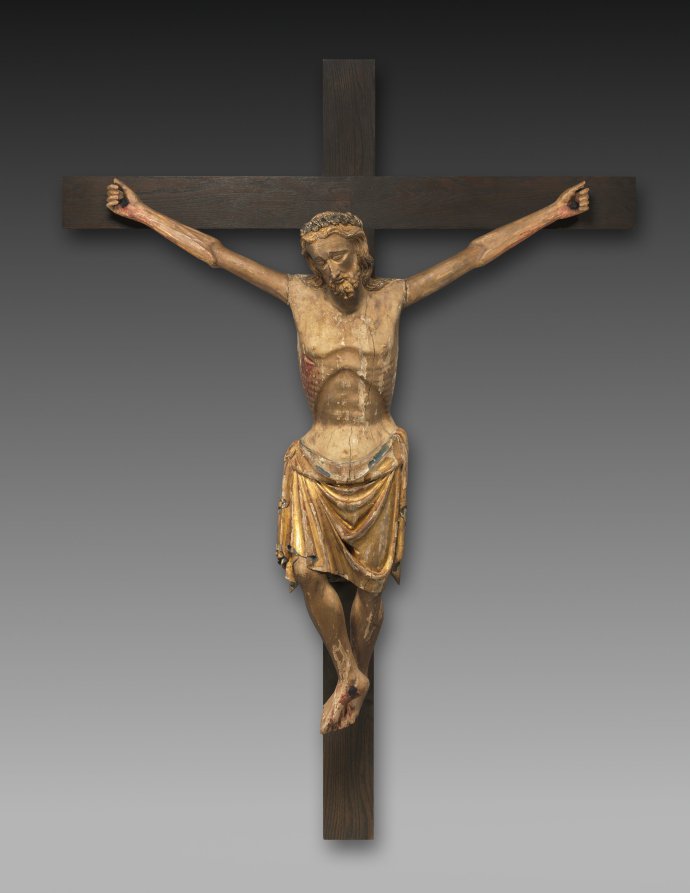
Crucified Christ (late 1300s) is in the Cleveland Museum of Art collection.
The work and its context
The museum's open-access catalogue describes the work:
This carved wooden corpus of Christ was covered with a layer of linen and painted with vivid colors. Given its large scale it would have been intended for display in a church. Most likely it was suspended high over an altar facing the choir. During the Middle Ages, a monumental cross was often hung above the altar, and a smaller cross placed upon it. While not required by the liturgy, these crosses were visible symbols of the subject and focus of the Mass. The style of the corpus would suggest it comes from Navarre in northeast Spain.
Object facts
- Title: Crucified Christ
- Date: late 1300s
- Culture: Spain, Navarre?, late 14th century
- Type: Sculpture
- Technique: painted and gilded wood (poplar)
- Dimensions: Overall: 211 x 154.9 x 32.2 cm (83 1/16 x 61 x 12 11/16 in.)
- Collection: MED - Gothic
- Department: Medieval Art
- Accession number: 1968.33
Collection credit
Andrew R. and Martha Holden Jennings Fund
View the collection record
See the museum's photographs and full catalogue entry. Catalogue text is reproduced from the Cleveland Museum of Art's open-access data, with HTML formatting removed. This object and its supplied image are designated CC0.
Sources
More in Lifestyle
Keep reading