Cup with Four Faces (600–1000): Art, History and Details
Cup with Four Faces at the Cleveland Museum of Art: 600–1000, Stone with shell inlay. Explore the work's context, creator attribution and collection history.
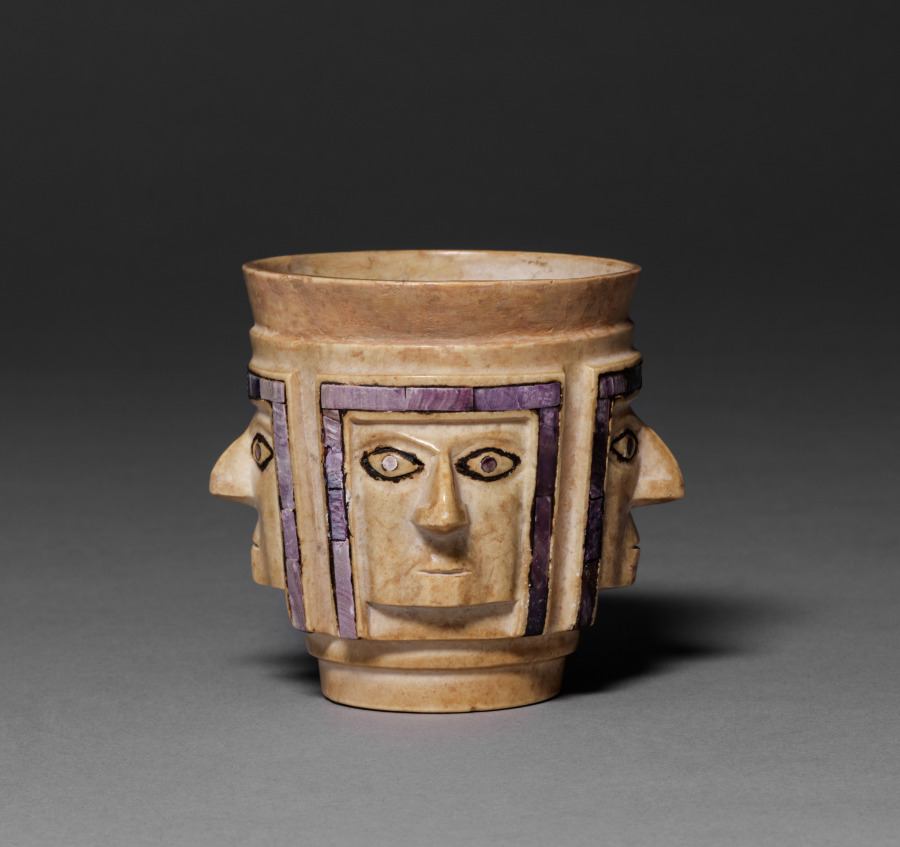
Cup with Four Faces (600–1000) is in the Cleveland Museum of Art collection.
The work and its context
The museum's open-access catalogue describes the work:
The identity of the four, wide-eyed faces on this cup is unknown. Equally mysterious is the cup’s function. It seems too small to be used for drinking beer at the feasts the Wari sponsored to put others in their debt. The size may suggest the cup was used in more intimate circumstances, perhaps to make libations to sacred forces that animated the ancient landscape.
Object facts
- Title: Cup with Four Faces
- Date: 600–1000
- Culture: Central Andes, Wari people
- Type: Stone
- Technique: Stone with shell inlay
- Dimensions: Overall: 9.5 x 9.2 cm (3 3/4 x 3 5/8 in.)
- Collection: AA - Andes
- Department: Art of the Americas
- Accession number: 2019.169
A detail from the museum
The inlay is made of spondylus (thorny oyster) shell, a form of wealth in antiquity.
Collection credit
Severance and Greta Millikin Purchase Fund
Further reading listed by the museum
- Museum of Primitive Art (New York, N.Y.). Precolumbian Art in New York; Selections from Private Collections. [New York]: Distributed by New York Graphic Society, Greenwich, Conn, 1969.
- Lapiner, Alan C. Pre-Columbian Art of South America. New York: H.N. Abrams, 1976.
- Sotheby's (Firm). Pre Columbian Art. 1991.
View the collection record
See the museum's photographs and full catalogue entry. Catalogue text is reproduced from the Cleveland Museum of Art's open-access data, with HTML formatting removed. This object and its supplied image are designated CC0.
Sources
More in Lifestyle
Keep reading