Dagger and Scabbard (1800s): Art, History and Details
Dagger and Scabbard at the Cleveland Museum of Art: 1800s, metal. Explore the work's context, creator attribution and collection history.
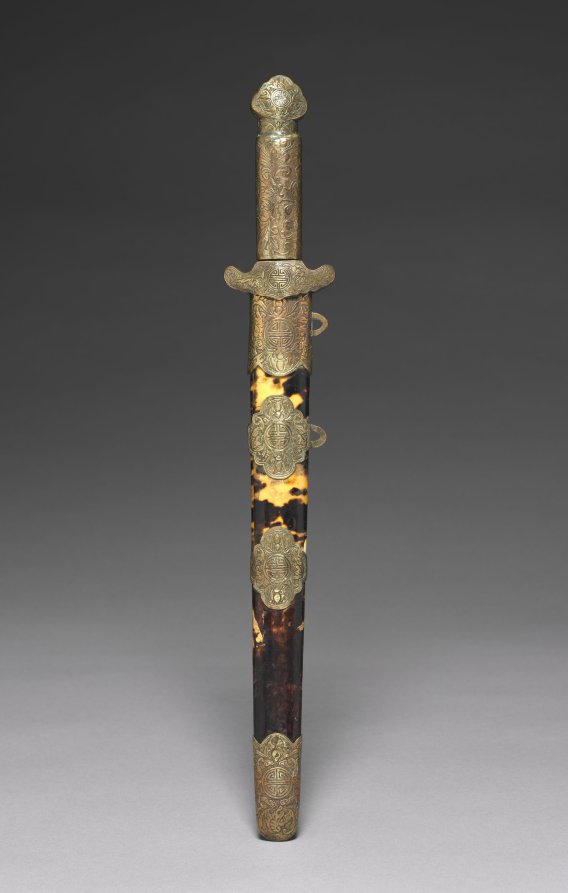
Dagger and Scabbard (1800s) is in the Cleveland Museum of Art collection.
The work and its context
The museum's open-access catalogue describes the work:
This is a typical 19th-century dagger and scabbard. The material and decoration were carefully chosen for their symbolic meaning. For example, tortoise shell was chosen as the main material for the scabbard for its association with the legend of ancient heroes, while bats, the main decorative element of the brass mount, symbolize longevity and happiness.
Object facts
- Title: Dagger and Scabbard
- Date: 1800s
- Type: Arms and Armor
- Technique: metal
- Dimensions: Overall: 42.5 cm (16 3/4 in.); Hilt: 6.4 cm (2 1/2 in.); Scabbard: 31.2 cm (12 5/16 in.)
- Collection: Korean Art
- Department: Korean Art
- Accession number: 1995.246
A detail from the museum
In traditional East Asian art, bats, used here as a decorative element of the brass mount, symbolize longevity and happiness.
Collection credit
Gift of The Honorable Joseph P. Carroll and Roberta Carroll, M.D.
View the collection record
See the museum's photographs and full catalogue entry. Catalogue text is reproduced from the Cleveland Museum of Art's open-access data, with HTML formatting removed. This object and its supplied image are designated CC0.
Sources
More in Lifestyle
Keep reading
Related stories