Dagger (Gwálaa) (late 1800s–early 1900s): Art, History and Details
Dagger (Gwálaa) at the Cleveland Museum of Art: late 1800s–early 1900s, Metal, shell, leather, fiber, ivory or horn. Explore the work's context, creator attribution and collection history.
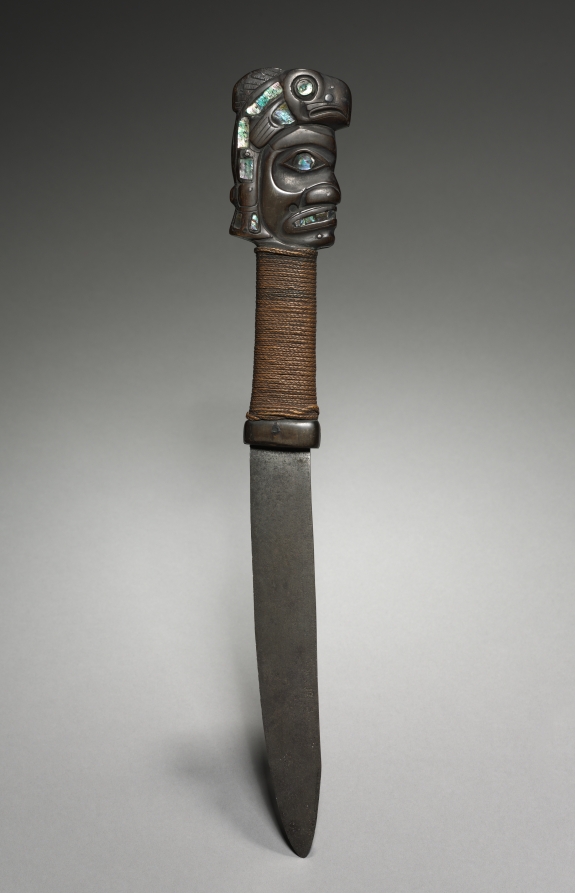
Dagger (Gwálaa) (late 1800s–early 1900s) is in the Cleveland Museum of Art collection.
The work and its context
The museum's open-access catalogue describes the work:
After Europeans introduced firearms, the Indigenous Northwest Coast dagger transformed from a weapon into a status symbol worn in a sheath that hung from the neck. That may be the case with this example, which depicts a head surmounted by a fish, perhaps a salmon.
Object facts
- Title: Dagger (Gwálaa)
- Date: late 1800s–early 1900s
- Culture: Native North America, Northwest Coast, Alaska, Tlingit
- Type: Arms and Armor
- Technique: Metal, shell, leather, fiber, ivory or horn
- Dimensions: Overall: 2.5 x 6 cm (1 x 2 3/8 in.); Blade: 21 cm (8 1/4 in.)
- Collection: AA - Native North America
- Department: Art of the Americas
- Accession number: 1916.719
Collection credit
Gift of J. H. Wade
View the collection record
See the museum's photographs and full catalogue entry. Catalogue text is reproduced from the Cleveland Museum of Art's open-access data, with HTML formatting removed. This object and its supplied image are designated CC0.
Sources
More in Lifestyle
Keep reading
Related stories


