Deep Vessel (c. 2500 BCE): Art, History and Details
Deep Vessel at the Cleveland Museum of Art: c. 2500 BCE, Earthenware with impressed and carved decoration. Explore the work's context, creator attribution and collection history.
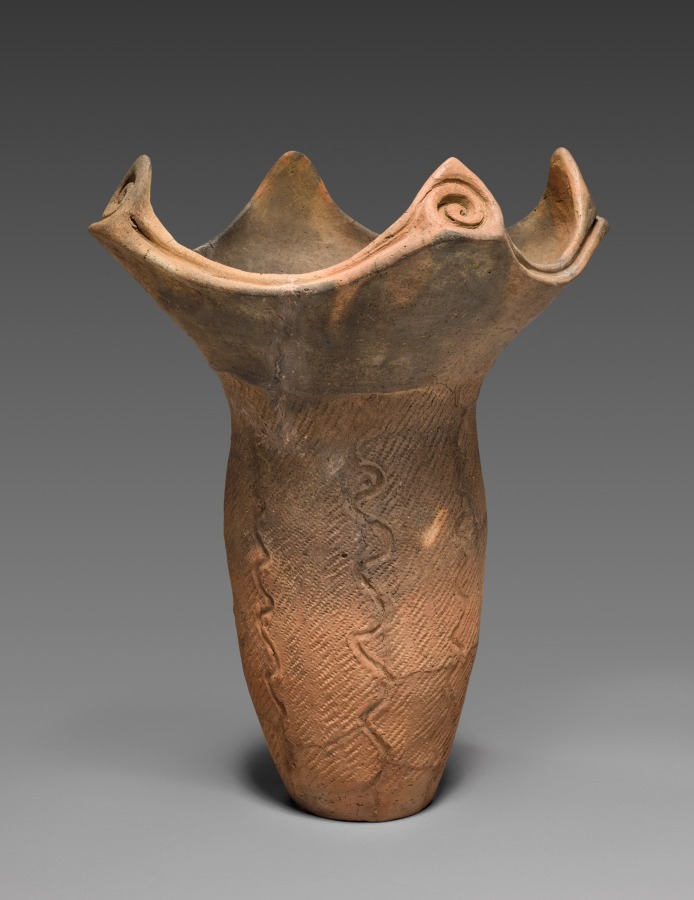
Deep Vessel (c. 2500 BCE) is in the Cleveland Museum of Art collection.
The work and its context
The museum's open-access catalogue describes the work:
This cooking vessel was formed by piling coils of clay atop one another, smoothing and thinning the walls, and then adding surface decoration. Vertical incised squiggle lines as well as diagonal impressed cord patterns create texture. The mouth rises in four dramatic triangular forms, each with a coiled design inside.
Object facts
- Title: Deep Vessel
- Date: c. 2500 BCE
- Culture: Japan, Jōmon period (c. 10,500–300 BCE)
- Type: Ceramic
- Technique: Earthenware with impressed and carved decoration
- Dimensions: height: 44.7 cm (17 5/8 in.); Diameter: 36.8 cm (14 1/2 in.)
- Collection: Japanese Art
- Department: Japanese Art
- Accession number: 1998.32
A detail from the museum
Jōmon, impressed rope patterns, are typical of vessels of this era, so archaeologists named the period after them.
Collection credit
John L. Severance Fund
Further reading listed by the museum
- Cleveland Museum of Art, “Painting by 18th-century Italian Master Gaetano Gandolfi among Works Added to CMA Collection,” March 24, 1998, Cleveland Museum of Art Archives.
View the collection record
See the museum's photographs and full catalogue entry. Catalogue text is reproduced from the Cleveland Museum of Art's open-access data, with HTML formatting removed. This object and its supplied image are designated CC0.
Sources
More in Lifestyle
Keep reading