Design for a Ewer (1530–62): Art, History and Details
Design for a Ewer at the Cleveland Museum of Art: 1530–62, etching and engraving. Explore the work's context, creator attribution and collection history.
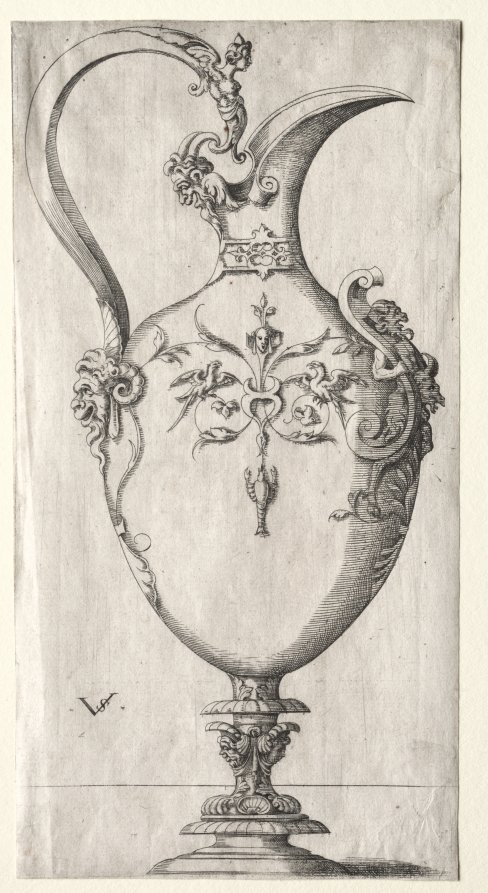
Design for a Ewer (1530–62) is in the Cleveland Museum of Art collection. The museum's creator attribution is Virgil Solis (German, 1514–1562).
The work and its context
The museum's open-access catalogue describes the work:
The decoration and function of this ewer, or jug, relates to wine. The satyr on the front of the vessel, satyr heads at the handle and mouth, and birds and crayfish on the side are mythological or natural creatures associated with Bacchus and his revelries. The shape is derived from a Greek wine jug called an oinochoe. Made by Virgil Solis, who ran a busy printmaking workshop in Nuremberg, Germany, the print was a model for artists working in other media, such as silver.
Object facts
- Title: Design for a Ewer
- Date: 1530–62
- Creator attribution: Virgil Solis (German, 1514–1562)
- Culture: Germany
- Type: Print
- Technique: etching and engraving
- Dimensions: Sheet: 26.5 x 13.9 cm (10 7/16 x 5 1/2 in.)
- Collection: PR - Engraving
- Department: Prints
- Accession number: 1961.315
Collection credit
Delia E. Holden Fund
View the collection record
See the museum's photographs and full catalogue entry. Catalogue text is reproduced from the Cleveland Museum of Art's open-access data, with HTML formatting removed. This object and its supplied image are designated CC0.
Sources
More in Lifestyle
Keep reading
Related stories