Design for United States Currency (1912): Art, History and Details
Design for United States Currency at the Cleveland Museum of Art: 1912, graphite. Explore the work's context, creator attribution and collection history.
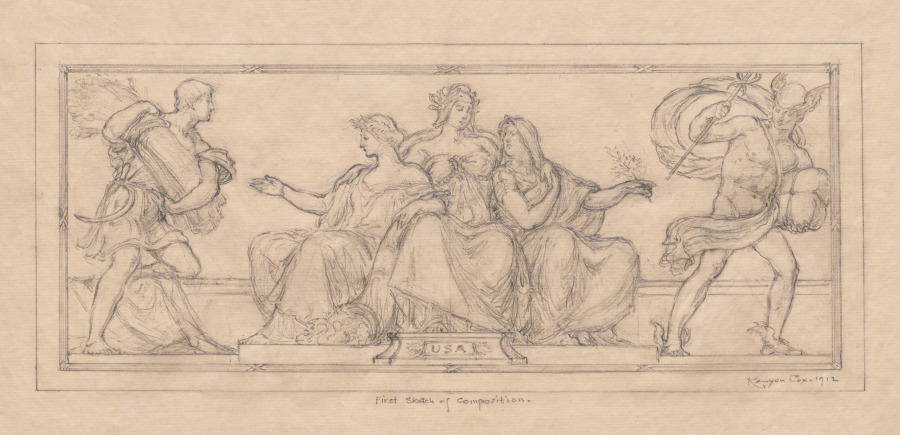
Design for United States Currency (1912) is in the Cleveland Museum of Art collection. The museum's creator attribution is Kenyon Cox (American, 1856–1919).
The work and its context
The museum's open-access catalogue describes the work:
The painter and muralist Kenyon Cox viewed himself as the heir to the great traditions of the Italian Renaissance and vigorously led the resistance to all forms of modern painting. This design for U. S. currency, which was rejected by the government, shows the care with which he planned his compositions. Cox's son, Allyn, who also became a successful mural painter, posed for the male figure. Cox's brother, J. D. Cox, a prominent civic leader in Cleveland, played an active role in the formation of the Cleveland Museum of Art. He gave the museum the three works by his brother that are in this exhibition.
Object facts
- Title: Design for United States Currency
- Date: 1912
- Creator attribution: Kenyon Cox (American, 1856–1919)
- Culture: America
- Type: Drawing
- Technique: graphite
- Dimensions: Image: 15.9 x 37.8 cm (6 1/4 x 14 7/8 in.); Sheet: 30.3 x 50.8 cm (11 15/16 x 20 in.)
- Collection: DR - American 20th Century
- Department: Drawings
- Accession number: 1916.1069
Collection credit
Gift of J. D. Cox
Further reading listed by the museum
- "Accessions." The Bulletin of the Cleveland Museum of Art 4, no. 2 (1917): 26-37.
View the collection record
See the museum's photographs and full catalogue entry. Catalogue text is reproduced from the Cleveland Museum of Art's open-access data, with HTML formatting removed. This object and its supplied image are designated CC0.
Sources
More in Lifestyle
Keep reading