Dish (c. 1475–1500): Art, History and Details
Dish at the Cleveland Museum of Art: c. 1475–1500, Tin-glazed earthenware with luster-painted design. Explore the work's context, creator attribution and collection history.
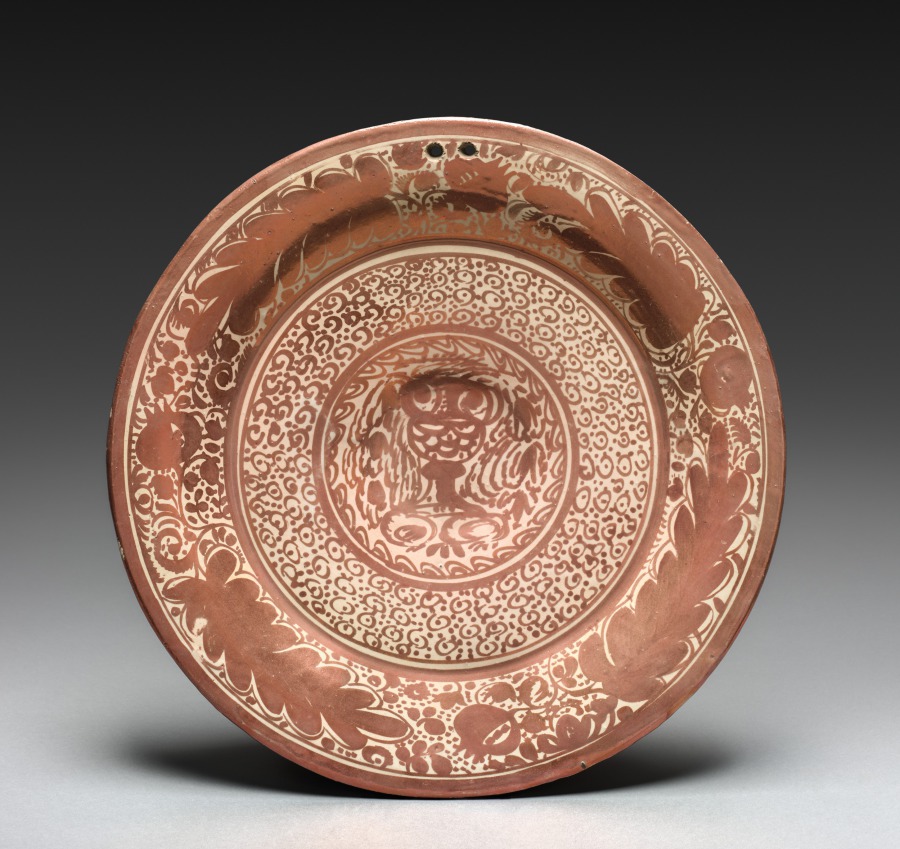
Dish (c. 1475–1500) is in the Cleveland Museum of Art collection.
The work and its context
The museum's open-access catalogue describes the work:
Alternating leaves and pomegranates circle the rim of this dish, emerging from the swirling vegetal motif in the background. The pomegranate is a common decorative element in Islamic art. It is mentioned in the Qur’an as one of the fruits of paradise and is prized for its beauty and nutritional benefits. The use of the pomegranate on this luminous dish may indicate that it was produced for the court of the Nasrid dynasty (1232–1492) in Spain. The palace of Alhambra, the seat of power for the emirs, dynastic Muslim rulers, from the early 1300s, is in Granada, which translates to pomegranate.
Object facts
- Title: Dish
- Date: c. 1475–1500
- Culture: Spain, probably Valencia
- Type: Ceramic
- Technique: Tin-glazed earthenware with luster-painted design
- Dimensions: Diameter: 42.6 cm (16 3/4 in.)
- Collection: Decorative Arts
- Department: Decorative Art and Design
- Accession number: 1915.712
A detail from the museum
A wine cup in the center of the dish evokes the pleasures of a feast.
Collection credit
Hinman B. Hurlbut Collection
View the collection record
See the museum's photographs and full catalogue entry. Catalogue text is reproduced from the Cleveland Museum of Art's open-access data, with HTML formatting removed. This object and its supplied image are designated CC0.
Sources
More in Lifestyle
Keep reading