Dish (c. 1600): Art, History and Details
Dish at the Cleveland Museum of Art: c. 1600, Fritware with underglaze design in black slip, Kubachi ware. Explore the work's context, creator attribution and collection history.
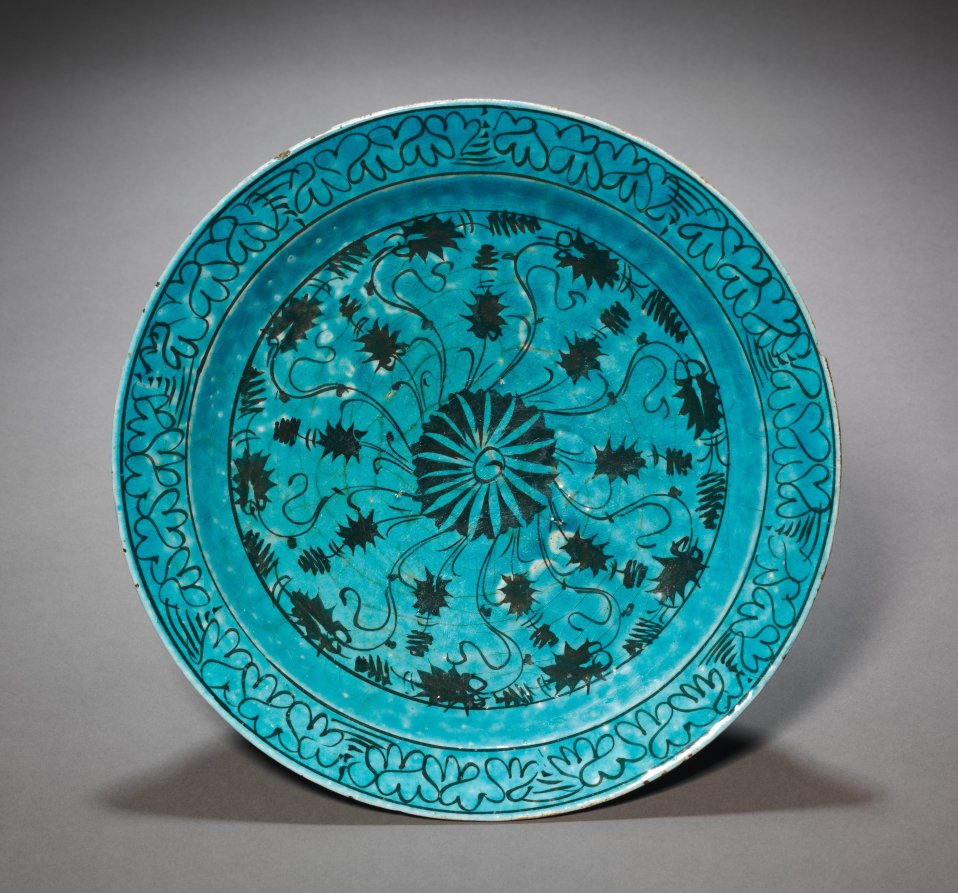
Dish (c. 1600) is in the Cleveland Museum of Art collection.
The work and its context
The museum's open-access catalogue describes the work:
This type of pottery is named after a town in the Caucasus, a region between the Black and Caspian Seas that encompasses modern-day Azerbaijan, Armenia, Georgia, and parts of southern Russia, where many of these objects were found. However, it is likely that Kubachi wares were produced in northwestern Iran using fritware, a ceramic that incorporates large amounts of crushed quartz into white clay. The use of black slip to paint designs under a turquoise glaze is striking and highlights the free-flowing floral motif.
Object facts
- Title: Dish
- Date: c. 1600
- Culture: Caucasus or northern Iran
- Type: Ceramic
- Technique: Fritware with underglaze design in black slip, Kubachi ware
- Dimensions: Diameter: 34.2 cm (13 7/16 in.)
- Collection: Islamic Art
- Department: Islamic Art
- Accession number: 1915.595
A detail from the museum
Because many of these vessels were found in peasant houses in the town of Kubachi in the Caucasus, the name "Kubachi" ware was given to the entire group.
Collection credit
Gift of the John Huntington Art and Polytechnic Trust
View the collection record
See the museum's photographs and full catalogue entry. Catalogue text is reproduced from the Cleveland Museum of Art's open-access data, with HTML formatting removed. This object and its supplied image are designated CC0.
Sources
More in Lifestyle
Keep reading


