Dish with Carved Floral Design (1100s–1200s): Art, History and Details
Dish with Carved Floral Design at the Cleveland Museum of Art: 1100s–1200s, Porcelain with pale bluish-white (qingbai) glaze. Explore the work's context, creator attribution and collection history.
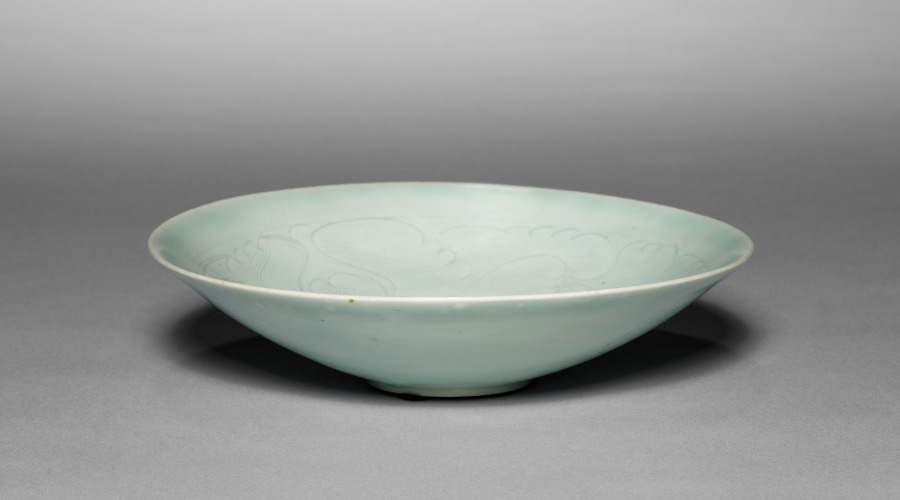
Dish with Carved Floral Design (1100s–1200s) is in the Cleveland Museum of Art collection.
The work and its context
The museum's open-access catalogue describes the work:
This shallow and wide bowl and the conical one (CMA 2020.182) are both hand-incised with decoration suggesting waves, clouds, or floral sprays. All of these motifs had auspicious meaning: waves and clouds bring rain that fertilizes the fields, and flowers and plants were often associated with the beauty of human virtues. The carved and combed designs were swiftly cut with a wooden tool into the unfired leather-hard body before glazing. Once the glaze was applied, it pooled in the incised areas rendering the design more visible.
Object facts
- Title: Dish with Carved Floral Design
- Date: 1100s–1200s
- Culture: South China, Southern Song dynasty (1127–1279)
- Type: Ceramic
- Technique: Porcelain with pale bluish-white (qingbai) glaze
- Dimensions: Overall: 4.5 x 18 cm (1 3/4 x 7 1/16 in.)
- Collection: China - Song Dynasty
- Department: Chinese Art
- Accession number: 2020.183
A detail from the museum
Never intended for imperial use, qingbai ware was among the first mass-produced porcelain types and became a popular export.
Collection credit
Nancy F. and Joseph P. Keithley Collection Gift
View the collection record
See the museum's photographs and full catalogue entry. Catalogue text is reproduced from the Cleveland Museum of Art's open-access data, with HTML formatting removed. This object and its supplied image are designated CC0.
Sources
More in Lifestyle
Keep reading