Divination Tray (ọpọ́n Ifá) (1900s): Art, History and Details
Divination Tray (ọpọ́n Ifá) at the Cleveland Museum of Art: 1900s, wood. Explore the work's context, creator attribution and collection history.
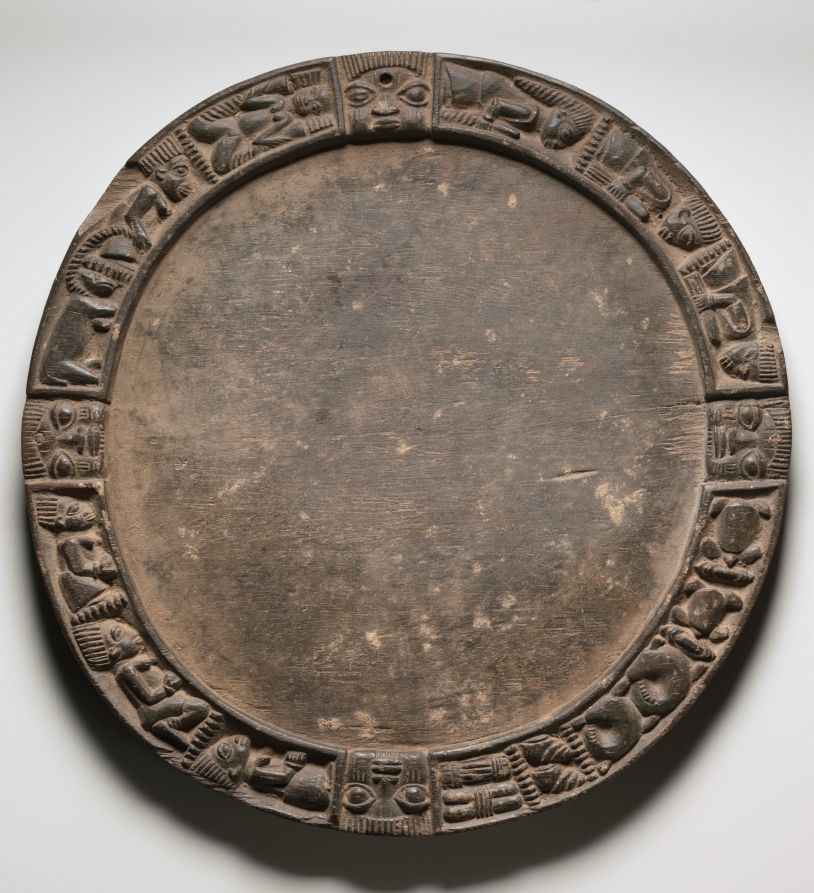
Divination Tray (ọpọ́n Ifá) (1900s) is in the Cleveland Museum of Art collection.
The work and its context
The museum's open-access catalogue describes the work:
In Ifa divination, the priest sprinkles wood powder over the smooth inner surface of a wooden tray. As the sacred palm nuts are cast, the diviner records the results by marking the powder with an ivory tapper. The markings reveal the proper chants to be recited. The four faces carved on the tray's rim portray Esu, who bears sacrifices to the gods, and oversees the divination ritual. The kneeling figures are probably petitioners; one has a leashed animal for sacrifice. Other motifs include turtles, curled mudfish, and snails. These creatures, which can survive on land or in water, are symbols of the diviner's ability to connect the human and spiritual realms.
Object facts
- Title: Divination Tray (ọpọ́n Ifá)
- Date: 1900s
- Culture: Africa, West Africa, Nigeria, Yorùbá-style maker
- Type: Sculpture
- Technique: wood
- Dimensions: Diameter: 42 cm (16 9/16 in.); Overall: 3.2 cm (1 1/4 in.)
- Collection: African Art
- Department: African Art
- Accession number: 1993.235
Collection credit
Gift of Drs. James and Gladys Strain
Further reading listed by the museum
- “1993 Annual Report.” The Bulletin of the Cleveland Museum of Art 81, no. 6 (July 1994): 143–218.
View the collection record
See the museum's photographs and full catalogue entry. Catalogue text is reproduced from the Cleveland Museum of Art's open-access data, with HTML formatting removed. This object and its supplied image are designated CC0.
Sources
More in Lifestyle
Keep reading