Dog (25–220 CE): Art, History and Details
Dog at the Cleveland Museum of Art: 25–220 CE, earthenware with lead glaze. Explore the work's context, creator attribution and collection history.
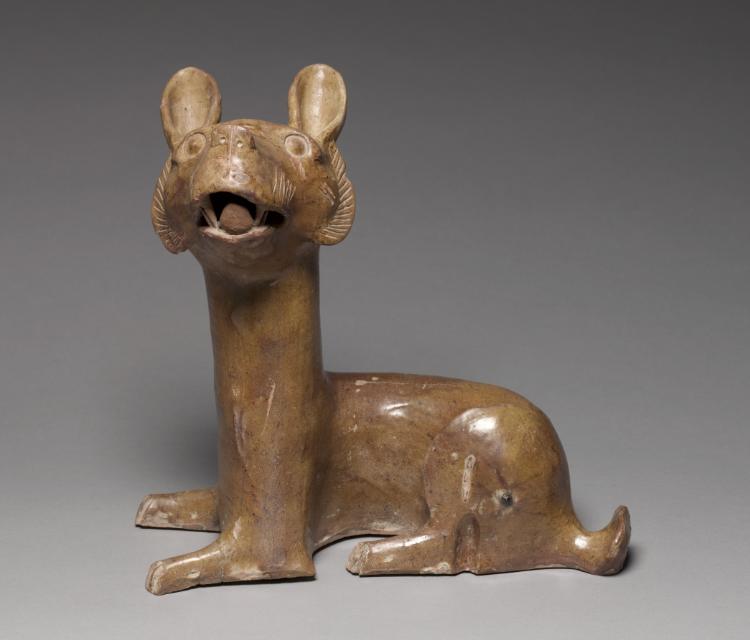
Dog (25–220 CE) is in the Cleveland Museum of Art collection.
The work and its context
The museum's open-access catalogue describes the work:
Modeled with a lively naturalism and light humor, this dog reflects the worldly tastes of Han China. It differs from the solemn animal images on ritual bronze vessels, which served as the medium for communication with the supernatural realms. The Han people held beliefs in a worldly paradise and an otherworldly realm of eternal life and happiness.
Object facts
- Title: Dog
- Date: 25–220 CE
- Culture: China, Eastern Han dynasty (25–220 CE)
- Type: Sculpture
- Technique: earthenware with lead glaze
- Dimensions: Overall: 36.5 cm (14 3/8 in.)
- Collection: China - Han Dynasty
- Department: Chinese Art
- Accession number: 1983.1
A detail from the museum
The dog's muzzle, whiskers, and neck scruff were boldly incised into the earthenware form.
Collection credit
Purchase from the J. H. Wade Fund
Further reading listed by the museum
- McNamee, Harriet. Chinese Art from the Ferris Luboshez Collection. [Exhibition Held at] University of Maryland Art Gallery, March 23 - April 30, 1972. College Park: University of Maryland Dept. of Art, 1972.
- Sotheby's, New York. Important Chinese Ceramics, Bronzes and Works of Art: the Collection of Captain S.N. Ferris Luboshez, USN (Ret'd). 18 November 1982. Lot 29.
- Turner, Evan H. “Year in Review for 1983.” The Bulletin of the Cleveland Museum of Art 71, no. 2 (February 1984): 38–79.
View the collection record
See the museum's photographs and full catalogue entry. Catalogue text is reproduced from the Cleveland Museum of Art's open-access data, with HTML formatting removed. This object and its supplied image are designated CC0.
Sources
More in Lifestyle
Keep reading