Dog Walker (early 1830s): Art, History and Details
Dog Walker at the Cleveland Museum of Art: early 1830s, gum tempera and ink on paper. Explore the work's context, creator attribution and collection history.
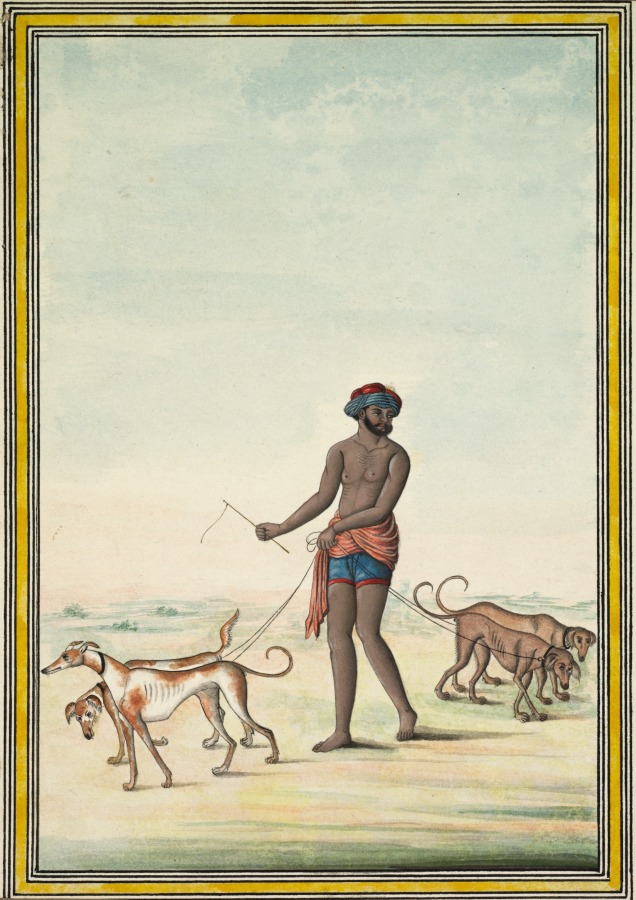
Dog Walker (early 1830s) is in the Cleveland Museum of Art collection.
The work and its context
The museum's open-access catalogue describes the work:
Made for a set that would have been sold to a British East India Company affiliate, this painting by an Indian artist depicts an Indian servant attempting to comply with the British convention of walking dogs on a leash. He seems resigned to accommodating British wishes, but without a natural understanding of how to do so properly. Similarly, the artist creates a cursory landscape setting and awkward shadows under the figures to accord with the preferences of British collectors for spatial depth and realism, but these were not elements of traditional Indian painting, and they appear as half-hearted and unsuccessful as the dog walk.
Object facts
- Title: Dog Walker
- Date: early 1830s
- Culture: British India, Lucknow
- Type: Painting
- Technique: gum tempera and ink on paper
- Dimensions: Overall: 22.2 x 15.9 cm (8 3/4 x 6 1/4 in.)
- Collection: Indian Art
- Department: Indian and Southeast Asian Art
- Accession number: 1992.143
A detail from the museum
William Ward worked as an exhibition designer at the Cleveland Museum of Art.
Collection credit
Seventy-fifth anniversary gift of William E. Ward in memory of his wife, Evelyn Svec Ward
Further reading listed by the museum
- Turner, Evan H. “The Year in Review for 1992.” The Bulletin of the Cleveland Museum of Art 80, no. 2 (February 1993): 38–79.
View the collection record
See the museum's photographs and full catalogue entry. Catalogue text is reproduced from the Cleveland Museum of Art's open-access data, with HTML formatting removed. This object and its supplied image are designated CC0.
Sources
More in Lifestyle
Keep reading