Doll (1900s): Art, History and Details
Doll at the Cleveland Museum of Art: 1900s, Wood, kaolin, and paint. Explore the work's context, creator attribution and collection history.
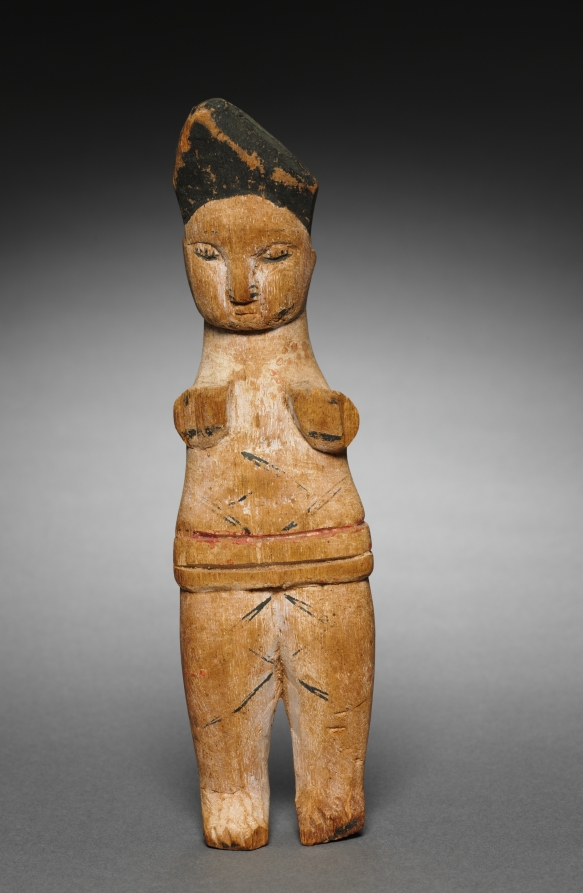
Doll (1900s) is in the Cleveland Museum of Art collection.
The work and its context
The museum's open-access catalogue describes the work:
Young Ibibio girls would play with dolls for fun. The dolls also took on deeper significance when a girl entered seclusion to go through preparations for adulthood and marriage, representing her future children and promoting her fertility. The kaolin (white clay) that once covered the figures' bodies has been worn off, possibly through handling during play. Thin lines represent uli, a kind of body painting. Upraised, foreshortened hands with open fingers were typical of dolls carved by Ibibio people from the Anang group.
Object facts
- Title: Doll
- Date: 1900s
- Culture: Africa, West Africa, Nigeria, Ibibio style, unknown artist
- Type: Sculpture
- Technique: Wood, kaolin, and paint
- Collection: African Art
- Department: African Art
- Accession number: 1996.267.1
A detail from the museum
Dolls like this were sold at markets where they were purchased as symbolic playthings for girls or souvenirs for tourists.
Collection credit
Gift of Harry W. Langworthy
Further reading listed by the museum
- The Cleveland Museum of Art, "CMA Annual Report, 1996" (Cleveland, CMA, 1997) listed p. 46.
View the collection record
See the museum's photographs and full catalogue entry. Catalogue text is reproduced from the Cleveland Museum of Art's open-access data, with HTML formatting removed. This object and its supplied image are designated CC0.
Sources
More in Lifestyle
Keep reading