Door and Frame (late 1400s): Art, History and Details
Door and Frame at the Cleveland Museum of Art: late 1400s, oak with traces of polychromy. Explore the work's context, creator attribution and collection history.
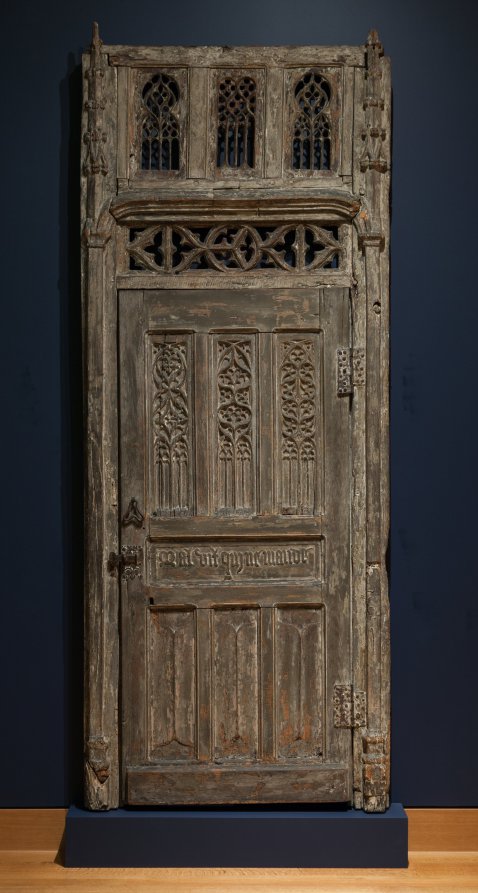
Door and Frame (late 1400s) is in the Cleveland Museum of Art collection.
The work and its context
The museum's open-access catalogue describes the work:
This elaborately carved door and frame was intended for use in a protected interior space as suggested by the delicate open tracery above and its use of polychromy. Though its original context is unknown, the door's placement may have been within either a domestic or ecclesiastical building. The inscription in Old French—Mal vit qui ne mande—is enigmatic and has been suggested to translate roughly as "He lives badly who does not ask." The source of the inscription is unclear but may have been a proverb or motto current during the time.
Object facts
- Title: Door and Frame
- Date: late 1400s
- Culture: France, late 15th century
- Type: Furniture and woodwork
- Technique: oak with traces of polychromy
- Dimensions: Overall: 278.9 x 104.8 x 14 cm (109 13/16 x 41 1/4 x 5 1/2 in.)
- Collection: MED - Gothic
- Department: Medieval Art
- Accession number: 1916.2051
Collection credit
Gift of the John Huntington Art and Polytechnic Trust
Further reading listed by the museum
- "Accessions." The Bulletin of the Cleveland Museum of Art 4, no. 2 (1917): 26-37.
- "The Relation of the Museum to Local Industry." The Bulletin of the Cleveland Museum of Art 5, no. 10 (1918): 122-31.
- "Closing Days of the Inaugural Exhibition." The Bulletin of the Cleveland Museum of Art 3, no. 3 (1916): 1-4.
View the collection record
See the museum's photographs and full catalogue entry. Catalogue text is reproduced from the Cleveland Museum of Art's open-access data, with HTML formatting removed. This object and its supplied image are designated CC0.
Sources
More in Lifestyle
Keep reading