Double-Arm Reliquary Cross (c. 1100–1200): Art, History and Details
Double-Arm Reliquary Cross at the Cleveland Museum of Art: c. 1100–1200, gold. Explore the work's context, creator attribution and collection history.
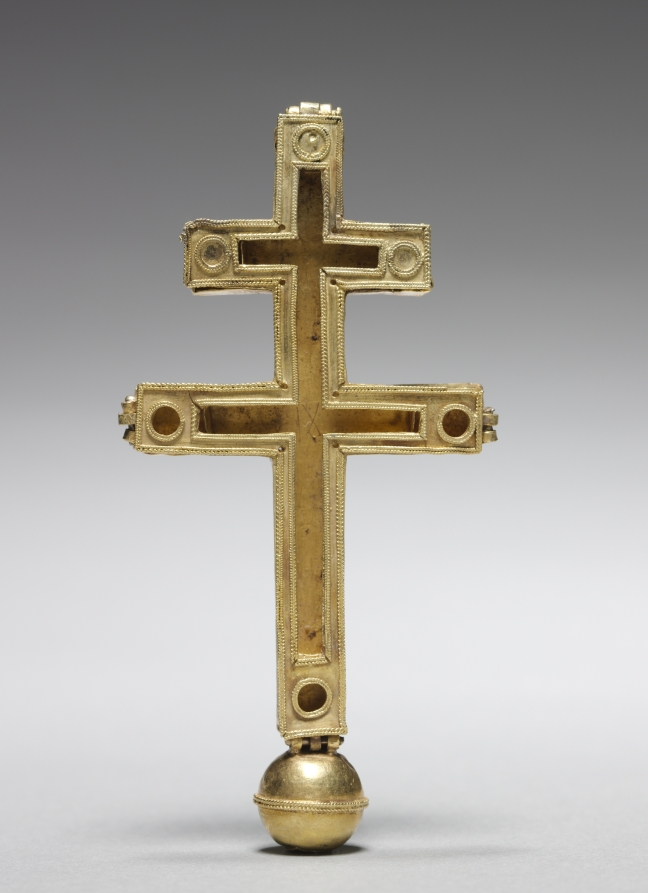
Double-Arm Reliquary Cross (c. 1100–1200) is in the Cleveland Museum of Art collection.
The work and its context
The museum's open-access catalogue describes the work:
This elegant double-arm cross once contained fragments of four of the most important relics of Christ’s Passion, namely a portion of the True Cross, a piece of Christ’s sudarium (sweat cloth), and fragments of the reed staff and sponge used by Christ’s tormentors to mock him and give him vinegar for his thirst during the Crucifixion. The identity of these relics and their placement in the cross are indicated by open cavities on the reliquary’s front and accompanying Latin inscriptions on its back.
Object facts
- Title: Double-Arm Reliquary Cross
- Date: c. 1100–1200
- Culture: Latin Kingdom of Jerusalem, Jerusalem, Gothic period, 12th century
- Type: Metalwork
- Technique: gold
- Dimensions: Overall: 10.5 x 5.3 x 1.5 cm (4 1/8 x 2 1/16 x 9/16 in.); Former: 11.5 cm (4 1/2 in.)
- Collection: MED - Gothic
- Department: Medieval Art
- Accession number: 1983.208
Collection credit
Purchase from the J. H. Wade Fund
Further reading listed by the museum
- Turner, Evan H. “Year in Review for 1983.” The Bulletin of the Cleveland Museum of Art 71, no. 2 (February 1984): 38–79.
- Bagnoli, Martina. Treasures of Heaven: Saints, Relics, and Devotion in Medieval Europe. Cleveland, OH: The Cleveland Museum of Art, 2010.
- Boehm, Barbara Drake and Melanie Holcomb. , et al. Jerusalem, 1000-1400: Every People Under Heaven. NY: The Metropolitan Museum of Art, 2016.
View the collection record
See the museum's photographs and full catalogue entry. Catalogue text is reproduced from the Cleveland Museum of Art's open-access data, with HTML formatting removed. This object and its supplied image are designated CC0.
Sources
More in Lifestyle
Keep reading