Double-Bat Bowl (c. 900–1550 (thermoluminescence date, 810–1310)): Art, History and Details
Double-Bat Bowl at the Cleveland Museum of Art: c. 900–1550 (thermoluminescence date, 810–1310), earthenware. Explore the work's context, creator attribution and collection history.
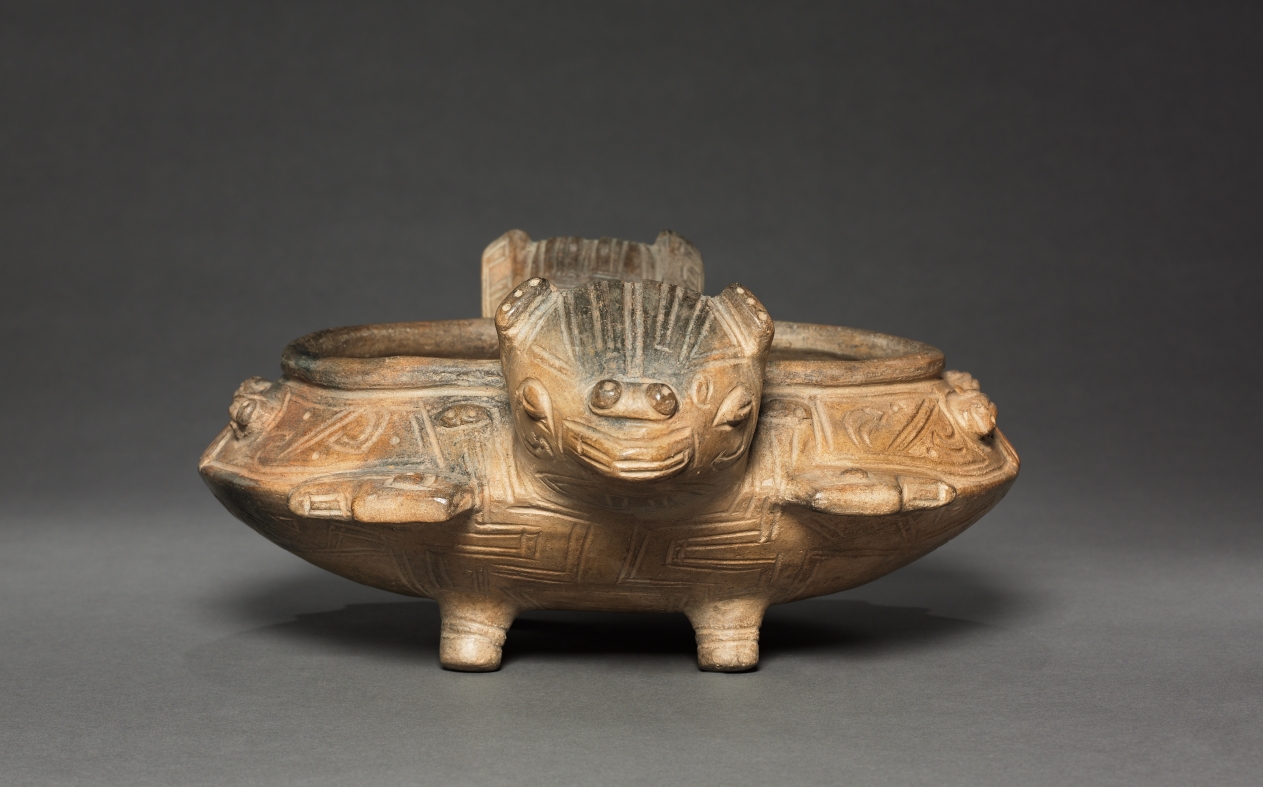
Double-Bat Bowl (c. 900–1550 (thermoluminescence date, 810–1310)) is in the Cleveland Museum of Art collection.
The work and its context
The museum's open-access catalogue describes the work:
The archaeological Tairona civilization of mountainous northern Colombia is believed to be ancestral to the contemporary Kogi indigenous group. Ancient Tairona sites are terraced, and characterized by circular stone building foundations. The most famous form of Tairona art is gold jewelry, especially lost-wax cast figurines of chiefs, and anthropomorphic bats and birds. Tairona ceramics are less well known. This bowl has two protruding bat heads and four legs. The incurved sides of the bowl to either side of each head represents the bats' wings. The vessel's surface is decorated with raised serpents, as well as incised and impressed patterns.
Object facts
- Title: Double-Bat Bowl
- Date: c. 900–1550 (thermoluminescence date, 810–1310)
- Culture: Colombia, Tairona
- Type: Ceramic
- Technique: earthenware
- Dimensions: Overall: 13.1 x 32 x 27.3 cm (5 3/16 x 12 5/8 x 10 3/4 in.)
- Collection: AA - Intermediate Region
- Department: Art of the Americas
- Accession number: 1999.12
A detail from the museum
The Tairona civilization lived in the mountains of northern Colombia.
Collection credit
John L. Severance Fund
View the collection record
See the museum's photographs and full catalogue entry. Catalogue text is reproduced from the Cleveland Museum of Art's open-access data, with HTML formatting removed. This object and its supplied image are designated CC0.
Sources
More in Lifestyle
Keep reading
Related stories