Drinker Seen From Behind (c. 1621–25): Art, History and Details
Drinker Seen From Behind at the Cleveland Museum of Art: c. 1621–25, etching. Explore the work's context, creator attribution and collection history.
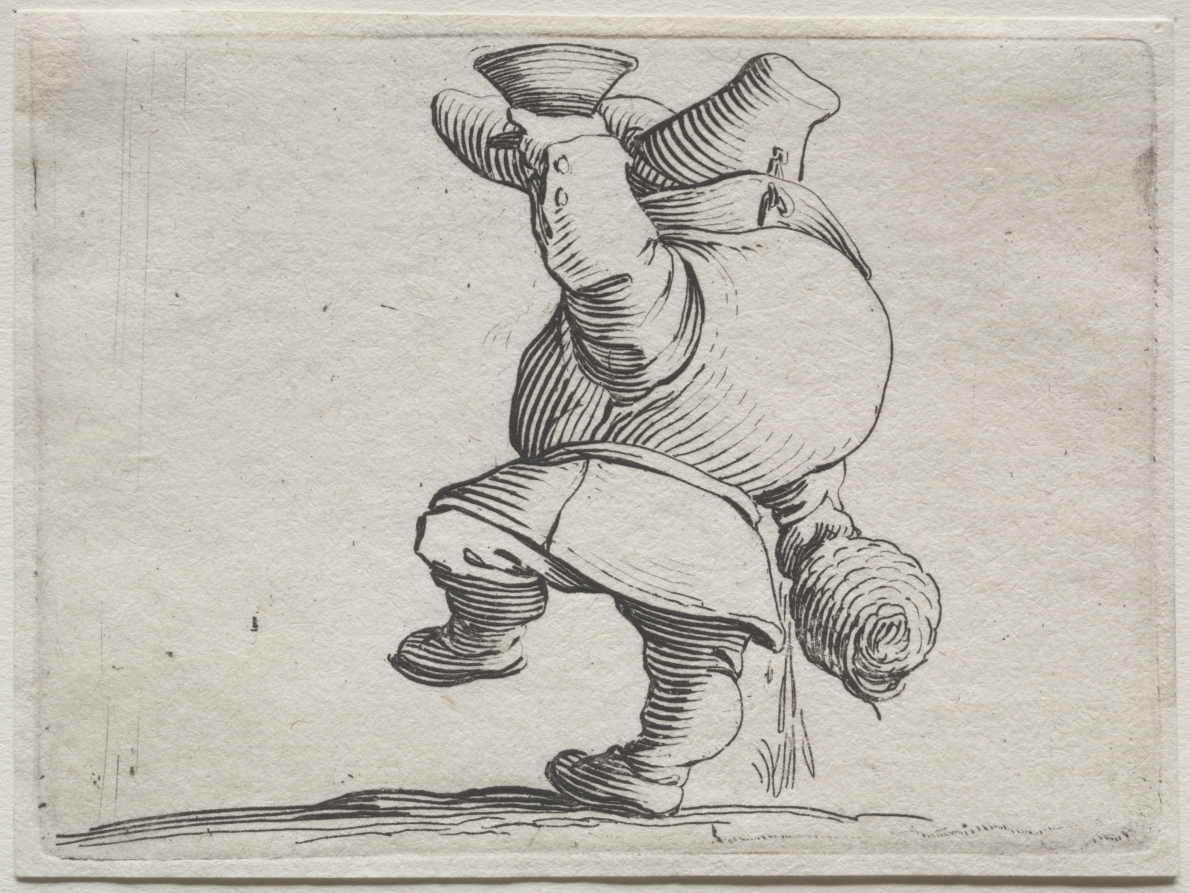
Drinker Seen From Behind (c. 1621–25) is in the Cleveland Museum of Art collection. The museum's creator attribution is Jacques Callot (French, 1592–1635).
The work and its context
The museum's open-access catalogue describes the work:
This image was published by Callot in 1621 as part of a series of 21 prints depicting gobbi (people with curved backs). The series was titled Varie figure gobbi di Jacopo Callot fatto in Firenza l'anno 1616 (Various hunchbacks by Jacopo Callot, made in Florence in 1616). The figures in the series are reminiscent of character tropes that were popular in the theatrical genre known as the commedia dell’arte (comedy of the profession). As the name suggests, the comedy of this genre was predicated on the assumption that the viewer occupied a different social class than the characters depicted. This figure's distorted physique and drunken dance would have suggested to contemporary audiences that he is inherently flawed in both body and mind.
Object facts
- Title: Drinker Seen From Behind
- Date: c. 1621–25
- Creator attribution: Jacques Callot (French, 1592–1635)
- Culture: France
- Type: Print
- Technique: etching
- Dimensions: Platemark: 6.3 x 8.5 cm (2 1/2 x 3 3/8 in.); Sheet: 6.6 x 8.9 cm (2 5/8 x 3 1/2 in.)
- Collection: PR - Etching
- Department: Prints
- Accession number: 1970.22
A detail from the museum
This figure is raising his cup in one hand and holding a bottle with the other. Both the bulbous shape of the bottle and its basketlike encasement suggest that it is made of glass, which was newly introduced for the storage of wine in the 1600s.
Collection credit
Gift of Mr. and Mrs. S. Fred Rosenthal for the fiftieth anniversary of The Print Club of Cleveland
View the collection record
See the museum's photographs and full catalogue entry. Catalogue text is reproduced from the Cleveland Museum of Art's open-access data, with HTML formatting removed. This object and its supplied image are designated CC0.
Sources
More in Lifestyle
Keep reading