Drinking Cup (900–1519): Art, History and Details
Drinking Cup at the Cleveland Museum of Art: 900–1519, pottery with burnished, colored slips. Explore the work's context, creator attribution and collection history.
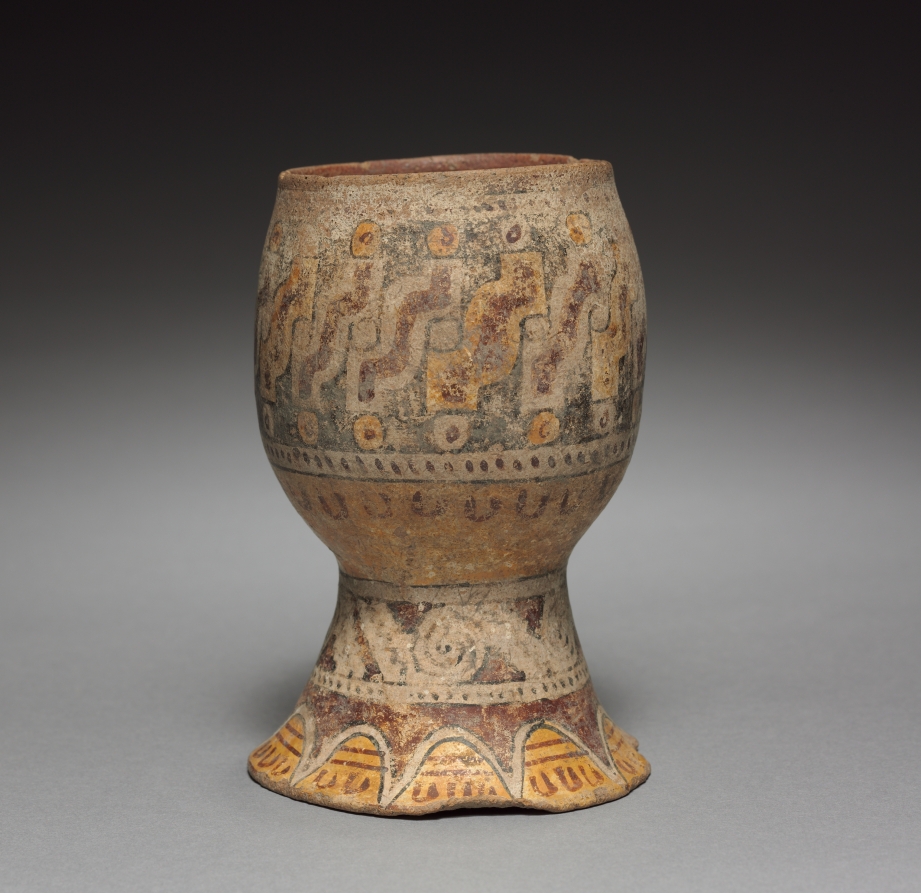
Drinking Cup (900–1519) is in the Cleveland Museum of Art collection.
The work and its context
The museum's open-access catalogue describes the work:
After about the year 800, several Mixtec kingdoms developed in the regions known today as Oaxaca and Puebla in southern Mexico. Mixtec artists excelled in creating small-scale, fine works of art, including polychrome pottery. A Mixtec noble may have used this well-painted goblet to drink chocolate or pulque, a fermented beverage made from the sap of the maguey cactus.
Object facts
- Title: Drinking Cup
- Date: 900–1519
- Culture: Mexico, Cholula(?), Mixteca-Puebla style
- Type: Sculpture
- Technique: pottery with burnished, colored slips
- Dimensions: Overall: 12.5 x 8.5 cm (4 15/16 x 3 3/8 in.)
- Collection: AA - Mesoamerica
- Department: Art of the Americas
- Accession number: 1990.212
A detail from the museum
Pulque, once the drink of gods and rulers, is now available in a can.
Collection credit
Gift of Mr. and Mrs. James C. Gruener
Further reading listed by the museum
- Young-Sánchez, Margaret. “The Gruener Collection of Pre-Columbian Art.” The Bulletin of the Cleveland Museum of Art 79, no. 7 (September 1992): 234–275.
View the collection record
See the museum's photographs and full catalogue entry. Catalogue text is reproduced from the Cleveland Museum of Art's open-access data, with HTML formatting removed. This object and its supplied image are designated CC0.
Sources
More in Lifestyle
Keep reading