Eagles (1368–1644): Art, History and Details
Eagles at the Cleveland Museum of Art: 1368–1644, Ink and color on silk panel. Explore the work's context, creator attribution and collection history.
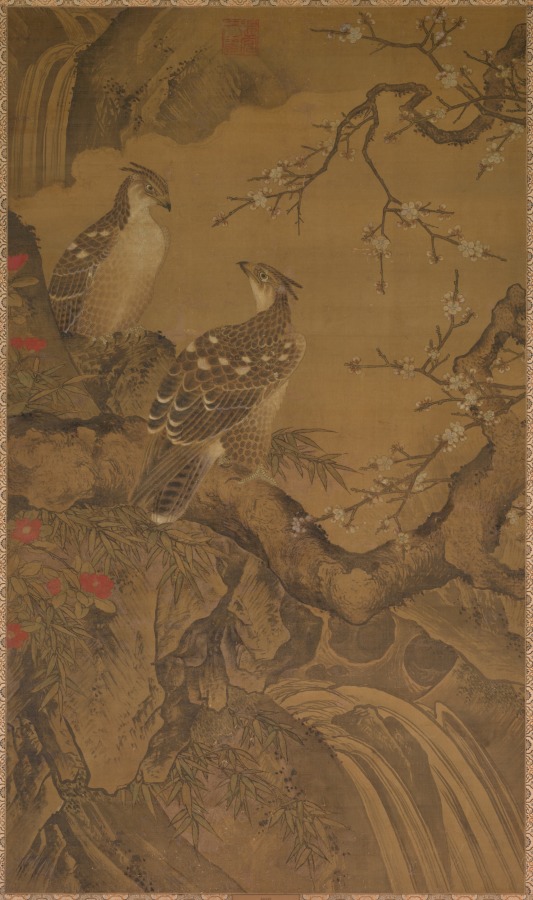
Eagles (1368–1644) is in the Cleveland Museum of Art collection.
The work and its context
The museum's open-access catalogue describes the work:
Two eagles, painted in fine brushwork, perch on top of rocks surrounded by water, flowering camellia, and other vegetation, brushed in sweeping and broad strokes. Among birds, a favorite subject in Chinese painting, depictions of eagles can be traced back to at least the fourth century. Due to dramatic sociopolitical changes during the foreign-ruled Yuan (1279–1368) and native Ming dynasties, an elaborate symbolic language of the eagle developed. It can represent a vicious attacker, a courageous hero, or an enlightened emperor. In this painting, the two eagles are depicted peacefully resting in a lofty position, perhaps an idealistic image for a wise emperor and empress.
Object facts
- Title: Eagles
- Date: 1368–1644
- Culture: China, Ming dynasty (1368–1644)
- Type: Painting
- Technique: Ink and color on silk panel
- Dimensions: Painting: 167.2 x 98.4 cm (65 13/16 x 38 3/4 in.); Overall framed: 189.3 x 114.5 cm (74 1/2 x 45 1/16 in.)
- Collection: China - Ming Dynasty
- Department: Chinese Art
- Accession number: 1915.710
Collection credit
Gift of the John Huntington Art and Polytechnic Trust
View the collection record
See the museum's photographs and full catalogue entry. Catalogue text is reproduced from the Cleveland Museum of Art's open-access data, with HTML formatting removed. This object and its supplied image are designated CC0.
Sources
More in Lifestyle
Keep reading