Ear Ornament (150–200 CE): Art, History and Details
Ear Ornament at the Cleveland Museum of Art: 150–200 CE, jadeite-albitite(?). Explore the work's context, creator attribution and collection history.
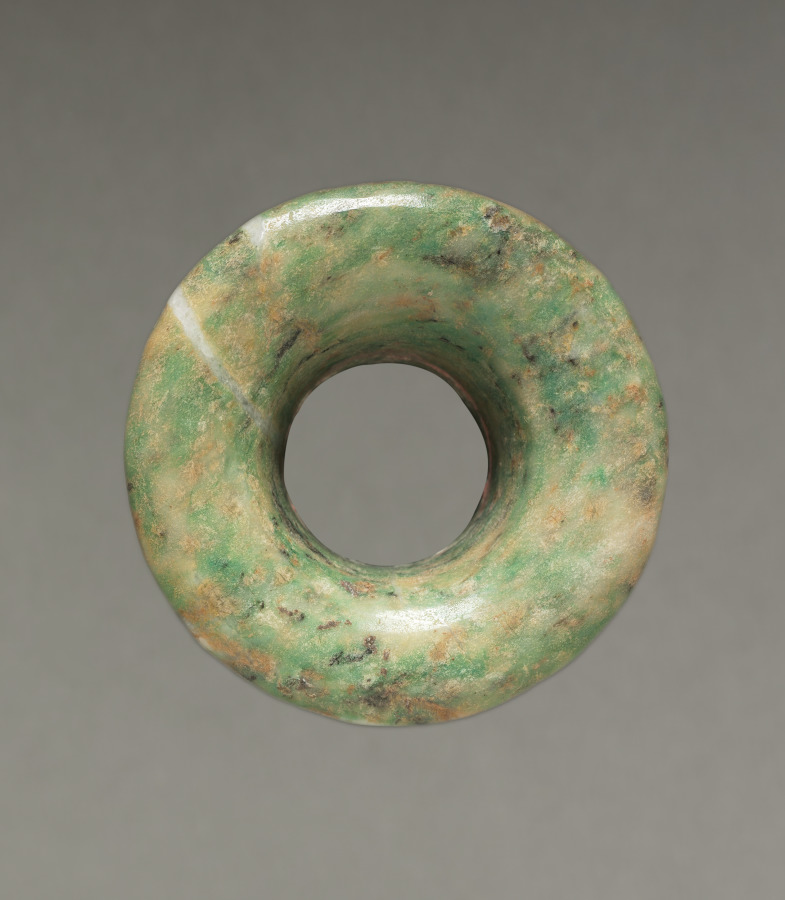
Ear Ornament (150–200 CE) is in the Cleveland Museum of Art collection.
The work and its context
The museum's open-access catalogue describes the work:
Near Teotihuacán's largest palace is a small temple gorgeously ornamented with green-feathered serpents, symbols of the earth's fertility. Beneath the temple lie at least 120 human sacrifices, most men, many warriors, and some wearing greenstone ornaments like these, perhaps a set. The sacrifices, apparently laid out to mark the cardinal directions, may have consecrated the temple or a ruler's tomb, or both.
Object facts
- Title: Ear Ornament
- Date: 150–200 CE
- Culture: Central Mexico, Teotihuacán style, Classic period
- Type: Sculpture
- Technique: jadeite-albitite(?)
- Dimensions: Diameter: 5.7 cm (2 1/4 in.); Overall: 2.6 cm (1 in.)
- Collection: AA - Mesoamerica
- Department: Art of the Americas
- Accession number: 1990.264.2
Collection credit
Gift of Mr. and Mrs. James C. Gruener
View the collection record
See the museum's photographs and full catalogue entry. Catalogue text is reproduced from the Cleveland Museum of Art's open-access data, with HTML formatting removed. This object and its supplied image are designated CC0.
Sources
More in Lifestyle
Keep reading

![Leaf Excised from a "Decretum" by Gratian: Initial C[anonici cuiusdam ecclesiae] with a Seated Cleric (c. 1300–1310; Cleveland 1926.245)](https://openaccess-cdn.clevelandart.org/1926.245/1926.245_web.jpg)