Earring (500–400 BCE): Art, History and Details
Earring at the Cleveland Museum of Art: 500–400 BCE, gold and agate. Explore the work's context, creator attribution and collection history.
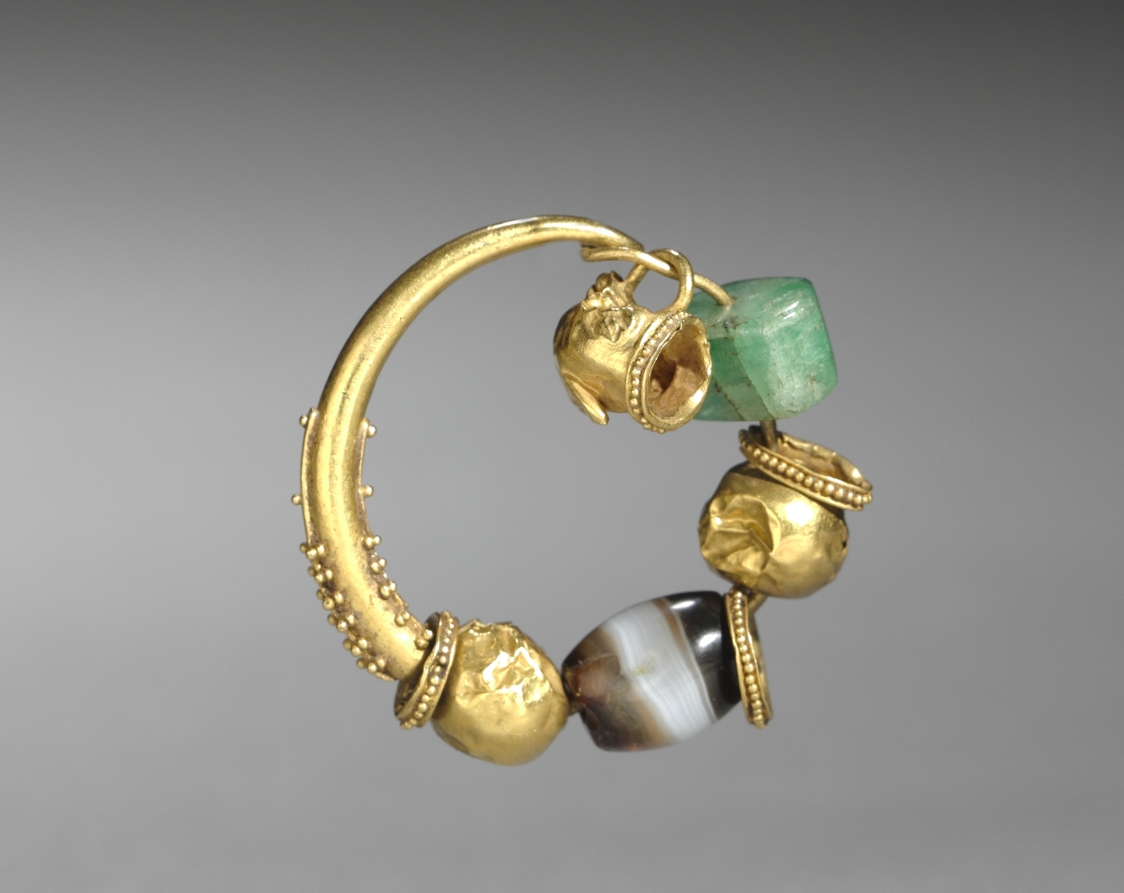
Earring (500–400 BCE) is in the Cleveland Museum of Art collection.
The work and its context
The museum's open-access catalogue describes the work:
This earring is made of a simple gold loop with gold, agate, and feldspar beads strung on it. One of the gold beads is in the shape of a dolphin’s upper body with a small ball in its mouth. Earrings were extremely popular throughout the ancient Mediterranean, often decorated with animal heads like dolphins, bulls, and goats.
Object facts
- Title: Earring
- Date: 500–400 BCE
- Culture: Cyprus
- Type: Jewelry
- Technique: gold and agate
- Dimensions: Diameter: 2 cm (13/16 in.)
- Collection: GR - Cypriot
- Department: Greek and Roman Art
- Accession number: 1916.131
A detail from the museum
The use of agate in jewelry dates to the Indus Valley Civilization, between 3300 and 1300 BCE.
Collection credit
Gift of Mr. and Mrs. J. H. Wade
View the collection record
See the museum's photographs and full catalogue entry. Catalogue text is reproduced from the Cleveland Museum of Art's open-access data, with HTML formatting removed. This object and its supplied image are designated CC0.
Sources
More in Lifestyle
Keep reading