Earring (c. 1100s–1200s): Art, History and Details
Earring at the Cleveland Museum of Art: c. 1100s–1200s, bronze. Explore the work's context, creator attribution and collection history.
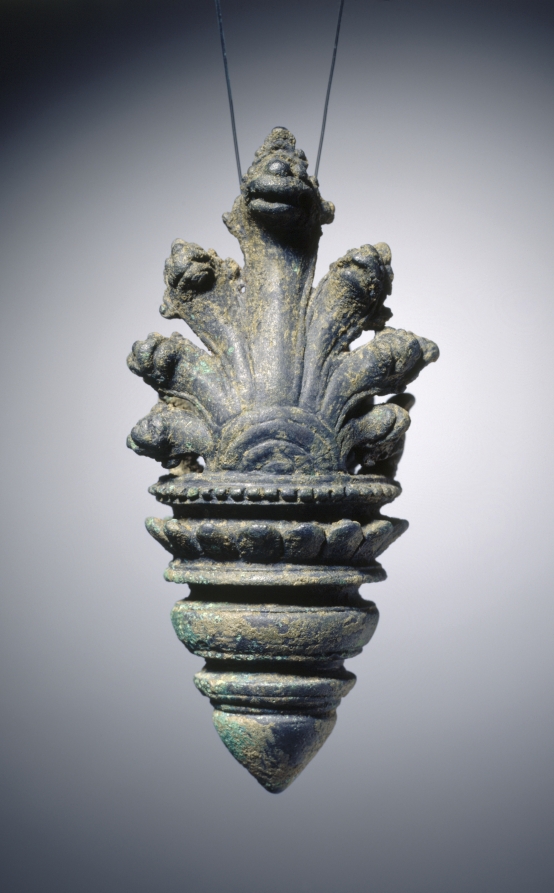
Earring (c. 1100s–1200s) is in the Cleveland Museum of Art collection.
The work and its context
The museum's open-access catalogue describes the work:
Earrings that were cast in bronze and then gilded (on this example, the gilding has worn off) were attached to the stone sculptures themselves. The serpent, a Khmer national emblem, was used frequently as an ornamental motif. The historical Buddha Shakyamuni was born a prince in northern India in the late 500s BC, and he wore heavy earrings that dragged down his earlobes. When he renounced worldly life to seek enlightenment, he cast off all his jewels. Generally, Buddha images have elongated earlobes without earrings, while bodhisattvas—beings close to full enlightenment—wear princely jewels in reference to Shakyamuni’s princely life just before he became a Buddha. By the early 1200s in Cambodia, however, these categories had become more nuanced: the bodhisattva Lokeshvara was viewed as such a potent figure he was sometimes called a Buddha and images of some special Buddhas other than Shakyamuni were distinguished by their jewelry.
Object facts
- Title: Earring
- Date: c. 1100s–1200s
- Culture: Cambodia, Angkorean Period (877-1431)
- Type: Jewelry
- Technique: bronze
- Dimensions: Overall: 8.3 x 3.5 x 3.2 cm (3 1/4 x 1 3/8 x 1 1/4 in.)
- Collection: Cambodian Art
- Department: Indian and Southeast Asian Art
- Accession number: 1987.71
A detail from the museum
This earring is topped with the form of a naga, a water serpent with a multi-headed hood.
Collection credit
John L. Severance Fund
View the collection record
See the museum's photographs and full catalogue entry. Catalogue text is reproduced from the Cleveland Museum of Art's open-access data, with HTML formatting removed. This object and its supplied image are designated CC0.
Sources
More in Lifestyle
Keep reading