Ecce Homo (1515): Art, History and Details
Ecce Homo at the Cleveland Museum of Art: 1515, engraving. Explore the work's context, creator attribution and collection history.
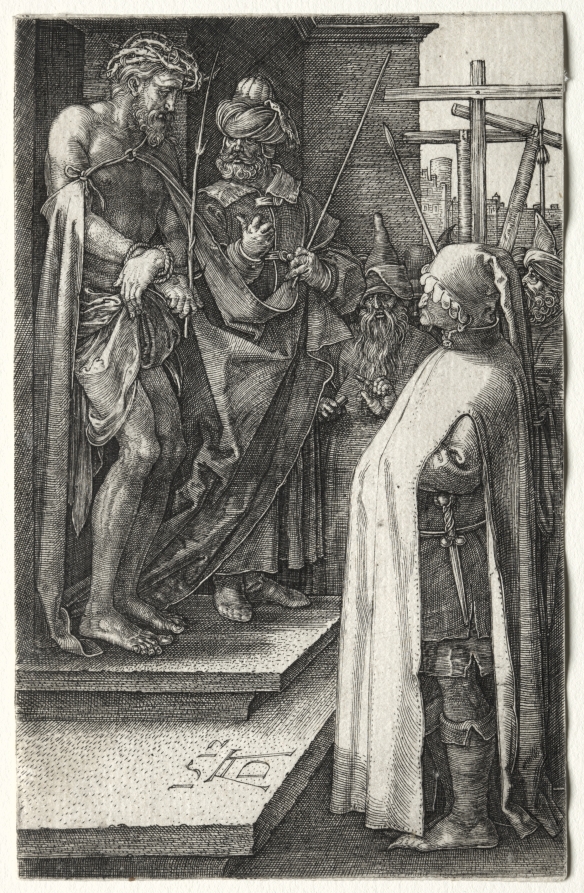
Ecce Homo (1515) is in the Cleveland Museum of Art collection. The museum's creator attribution is Albrecht Dürer (German, 1471–1528).
The work and its context
The museum's open-access catalogue describes the work:
This scene of the presentation of Christ to the people, or ecce homo (“behold the man”) from the Engraved Passion series exemplifies Albrecht Dürer’s instinct for the graphic possibilities of the engraved line. Working with a burin on a copperplate, he crossed lines at different angles and varied the thickness of the lines to create dramatic tonal areas and highly descriptive textures. In this closely cropped composition, the focus on Christ’s clenched and pained body as he stands in judgment before a crowd contrasts with the disinterest emanating from the man standing calmly before him.
Object facts
- Title: Ecce Homo
- Date: 1515
- Creator attribution: Albrecht Dürer (German, 1471–1528)
- Culture: Germany
- Type: Print
- Technique: engraving
- Collection: PR - Engraving
- Department: Prints
- Accession number: 1921.1168
Collection credit
Gift of The Print Club of Cleveland
Further reading listed by the museum
- McK., W. McC. "Print Club's Little Passion by Dürer." The Bulletin of the Cleveland Museum of Art 8, no. 9 (1921): 132-34.
View the collection record
See the museum's photographs and full catalogue entry. Catalogue text is reproduced from the Cleveland Museum of Art's open-access data, with HTML formatting removed. This object and its supplied image are designated CC0.
Sources
More in Lifestyle
Keep reading