Ecclesiastical Embroidery (Epigonation) (1600s–1700s): Art, History and Details
Ecclesiastical Embroidery (Epigonation) at the Cleveland Museum of Art: 1600s–1700s, embroidery; silk and metallic threads. Explore the work's context, creator attribution and collection history.
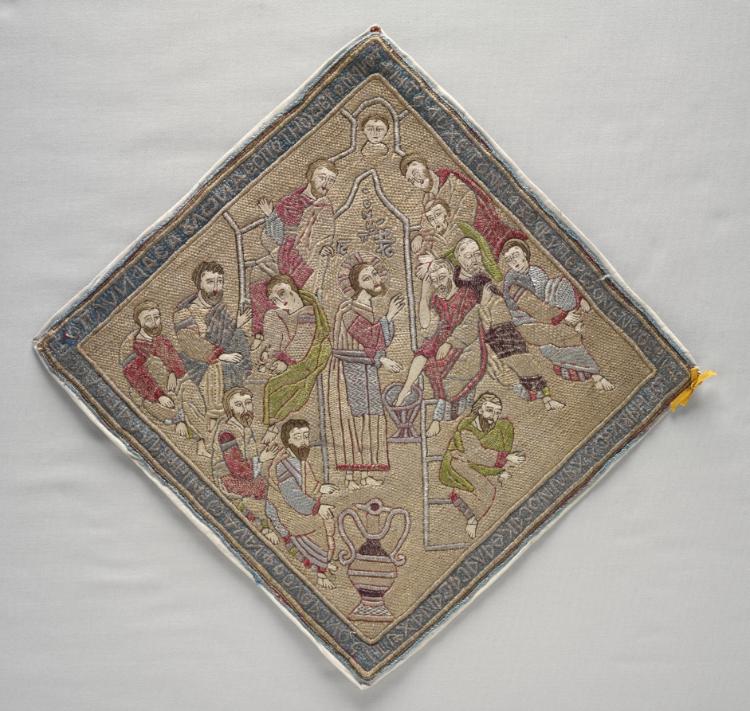
Ecclesiastical Embroidery (Epigonation) (1600s–1700s) is in the Cleveland Museum of Art collection.
The work and its context
The museum's open-access catalogue describes the work:
This ecclesiastical embroidery depicts Christ washing the feet of the 12 Disciples at the Last Supper. There is a Greek or old Slavonic inscription on the border, which is indecipherable. The heavy embroidery was done in gold, silver, and various silk threads.
Object facts
- Title: Ecclesiastical Embroidery (Epigonation)
- Date: 1600s–1700s
- Culture: Armenia and Greece, 17th-18th century
- Type: Embroidery
- Technique: embroidery; silk and metallic threads
- Dimensions: Overall: 48.2 x 49 cm (19 x 19 5/16 in.)
- Collection: T - Ecclesiastical
- Department: Textiles
- Accession number: 1916.1422
Collection credit
Gift of Mr. and Mrs. J. H. Wade
View the collection record
See the museum's photographs and full catalogue entry. Catalogue text is reproduced from the Cleveland Museum of Art's open-access data, with HTML formatting removed. This object and its supplied image are designated CC0.
Sources
More in Lifestyle
Keep reading
Related stories