"Elephant Bridge" souvenir (1900s): Art, History and Details
"Elephant Bridge" souvenir at the Cleveland Museum of Art: 1900s, Elephant ivory. Explore the work's context, creator attribution and collection history.
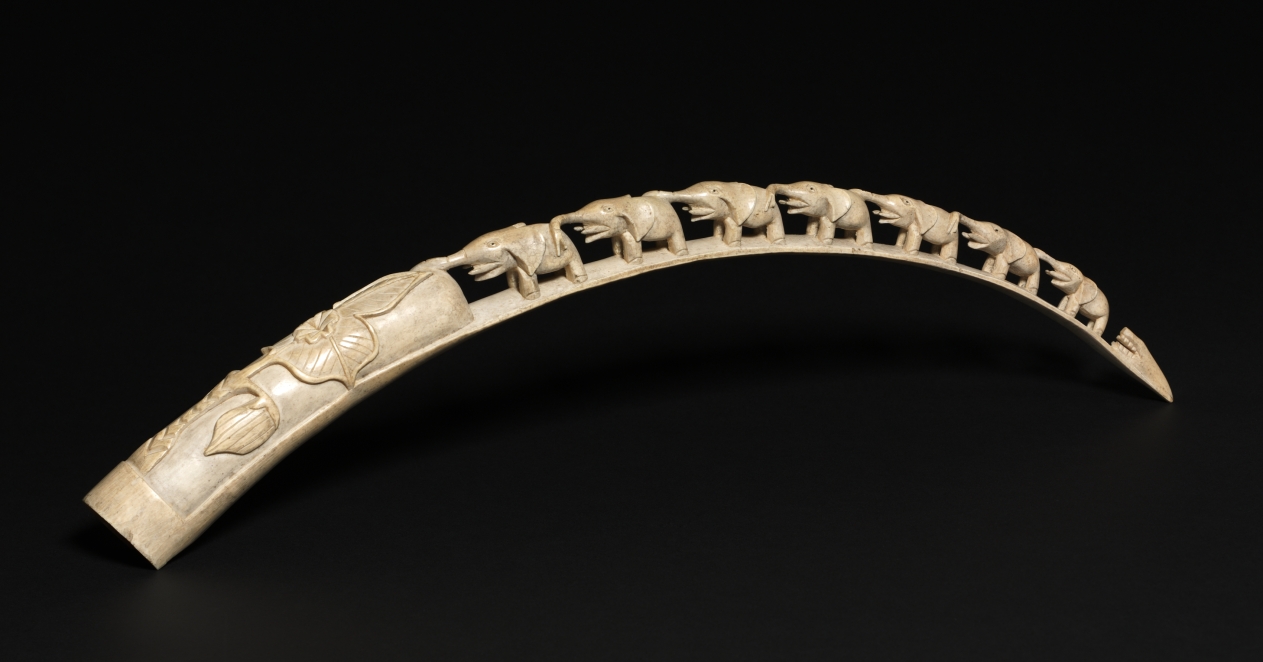
"Elephant Bridge" souvenir (1900s) is in the Cleveland Museum of Art collection.
The work and its context
The museum's open-access catalogue describes the work:
This carving was made to appeal to Europeans and Americans in Central Africa, and did not draw from local aesthetics. It depicts an "elephant bridge," where the pachyderms are arranged with trunks and tails touching along the natural curve of an ivory tusk. Such compositions were often made in Japan, India, or China.
Object facts
- Title: "Elephant Bridge" souvenir
- Date: 1900s
- Culture: Africa, Central Africa, Democratic Republic of Congo, Ekibondo, unknown maker
- Type: Sculpture
- Technique: Elephant ivory
- Dimensions: Overall: 75.9 cm (29 7/8 in.)
- Collection: African Art
- Department: African Art
- Accession number: 1929.342
A detail from the museum
Skilled carvers in Central Africa could easily imitate other styles presented by patrons who commissioned works, such as this Congolese take on an Asian composition of elephants.
Collection credit
Gift of the Gilpin Players of Karamu House
View the collection record
See the museum's photographs and full catalogue entry. Catalogue text is reproduced from the Cleveland Museum of Art's open-access data, with HTML formatting removed. This object and its supplied image are designated CC0.
Sources
More in Lifestyle
Keep reading