Embers Glow (1890–1897): Art, History and Details
Embers Glow at the Cleveland Museum of Art: 1890–1897, color etching and aquatint mounted on original aquatint mount with etched and aquatinted framing papers surrounding the impression. Explore the work's context, creator attribution and c
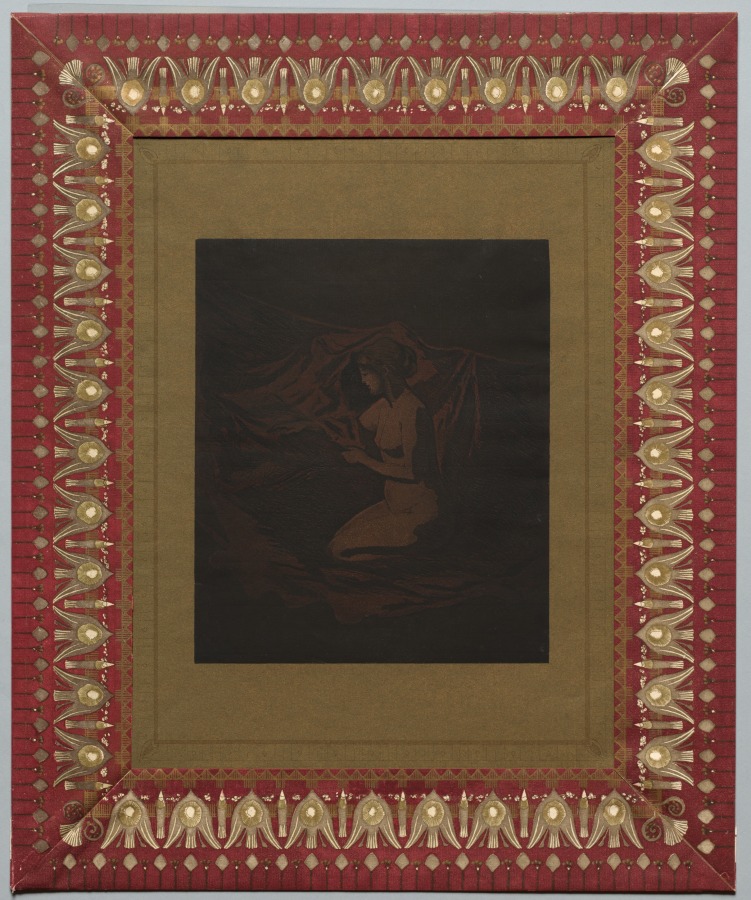
Embers Glow (1890–1897) is in the Cleveland Museum of Art collection. The museum's creator attribution is Theodore Roussel (French, 1847–1926).
The work and its context
The museum's open-access catalogue describes the work:
French artist Theodore Roussel took up etching while living in London during the late 1880s, developing his own techniques and distinctive style. Here, Roussel used aquatint to show a nude woman dimly lit by a fire. To accurately represent the evocative lighting described in the work’s title, Roussel mixed pigments to produce his own inks and carefully applied them to the plate with stencils. He also developed a method of registration so that the mat and frame—both his own printed designs—aligned precisely with the image.
Object facts
- Title: Embers Glow
- Date: 1890–1897
- Creator attribution: Theodore Roussel (French, 1847–1926)
- Culture: France, 19th century
- Type: Print
- Technique: color etching and aquatint mounted on original aquatint mount with etched and aquatinted framing papers surrounding the impression
- Dimensions: Sheet: 24.3 x 20.4 cm (9 9/16 x 8 1/16 in.); Framed: 50.5 x 41.7 x 7 cm (19 7/8 x 16 7/16 x 2 3/4 in.); Paper: 37.8 x 29.3 cm (14 7/8 x 11 9/16 in.)
- Collection: PR - Aquatint
- Department: Prints
- Accession number: 2013.86.10
A detail from the museum
Theodore Roussel was one of the few artists to use metallic ink in his printing around the time this print was made.
Collection credit
Gift of The Print Club of Cleveland
View the collection record
See the museum's photographs and full catalogue entry. Catalogue text is reproduced from the Cleveland Museum of Art's open-access data, with HTML formatting removed. This object and its supplied image are designated CC0.
Sources
More in Lifestyle
Keep reading