Engaged Capital (1400s): Art, History and Details
Engaged Capital at the Cleveland Museum of Art: 1400s, limestone. Explore the work's context, creator attribution and collection history.
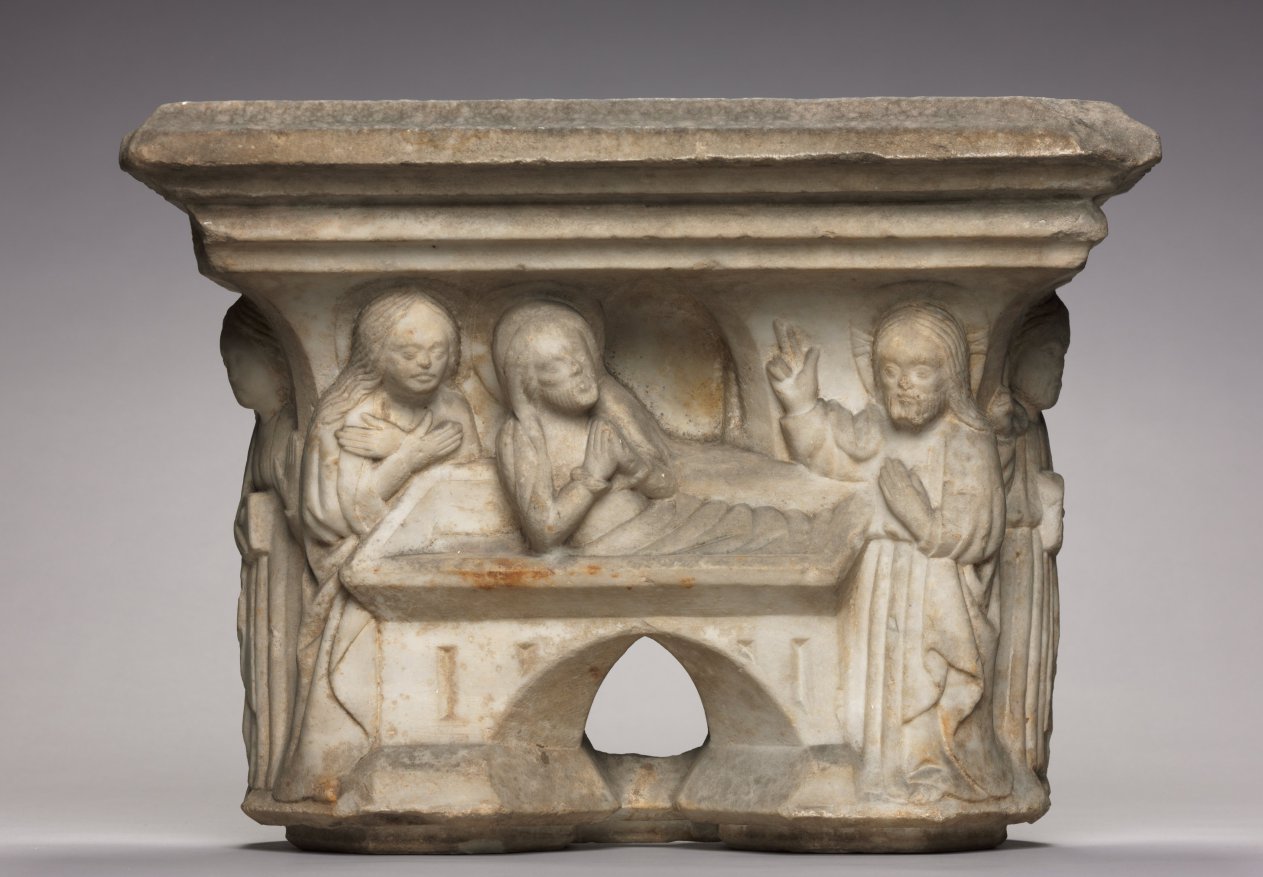
Engaged Capital (1400s) is in the Cleveland Museum of Art collection.
The work and its context
The museum's open-access catalogue describes the work:
This capital belongs to a surviving group including other architectural fragments that once decorated the cloister of the Abbey of Larreule. A cloister was a covered walkway or arcade, usually around all four sides of a square area of grass (the "cloister garth"). The seclusion of the cloister was the monks’ exclusive domain, off limits to others. Here, the monks were supposed to pray, study, meditate, and exercise in privacy and solitude. Such cloister capitals served both to instruct the monks and as a focus for their devotions. Other capitals in this series are installed in the Jardin Massey at Tarbes, near the original abbey. An arch from Larreule has been assembled with other associated French capitals at The Cloisters in New York.
Object facts
- Title: Engaged Capital
- Date: 1400s
- Culture: Southern France, Abbey of Larreule, near Tarbes, 15th century
- Type: Sculpture
- Technique: limestone
- Dimensions: Overall: 39.4 x 53.3 x 33 cm (15 1/2 x 21 x 13 in.)
- Collection: MED - Gothic
- Department: Medieval Art
- Accession number: 1916.2052.4
Collection credit
Gift of the John Huntington Art and Polytechnic Trust
View the collection record
See the museum's photographs and full catalogue entry. Catalogue text is reproduced from the Cleveland Museum of Art's open-access data, with HTML formatting removed. This object and its supplied image are designated CC0.
Sources
More in Lifestyle
Keep reading