Engaged Capital with Windblown Acanthus (400s): Art, History and Details
Engaged Capital with Windblown Acanthus at the Cleveland Museum of Art: 400s, limestone. Explore the work's context, creator attribution and collection history.
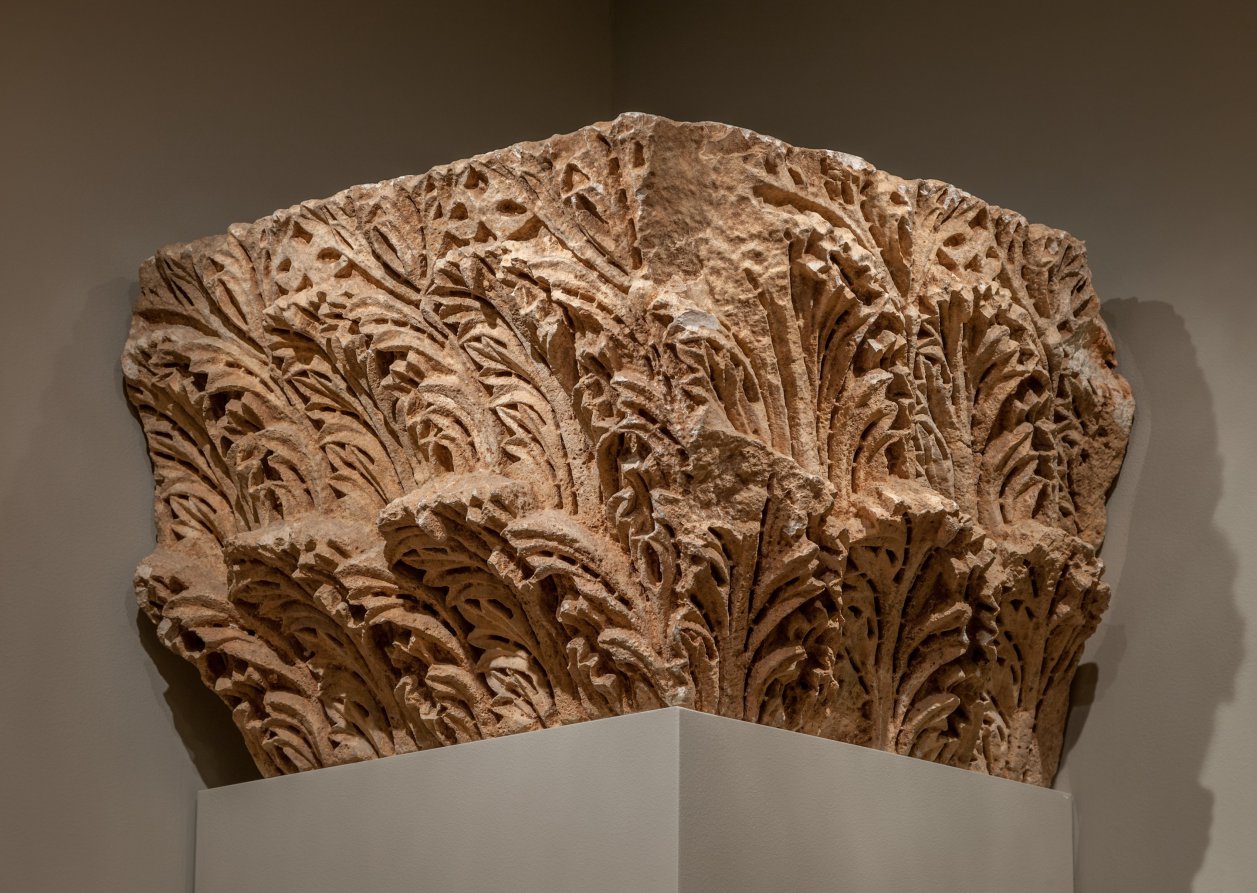
Engaged Capital with Windblown Acanthus (400s) is in the Cleveland Museum of Art collection.
The work and its context
The museum's open-access catalogue describes the work:
These capitals - the Capital with Acanthus and Crosses and the Engaged Capital with Windblown Acanthus - may have been found in Northern Syria and presumably come from a large and important church. Both capitals are decorated with leaves of acanthus, a fleshy plant with jagged leaves native to the Mediterranean area. One capital is symmetrical with crosses in its ornament, the other is asymmetrical and gives the impression of windblown leaves.
Object facts
- Title: Engaged Capital with Windblown Acanthus
- Date: 400s
- Culture: Byzantium, Northern Syria, Byzantine period, 5th century
- Type: Sculpture
- Technique: limestone
- Dimensions: Overall: 51.1 x 76.9 x 75 cm (20 1/8 x 30 1/4 x 29 1/2 in.)
- Collection: MED - Byzantine
- Department: Medieval Art
- Accession number: 1969.111
Collection credit
John L. Severance Fund
View the collection record
See the museum's photographs and full catalogue entry. Catalogue text is reproduced from the Cleveland Museum of Art's open-access data, with HTML formatting removed. This object and its supplied image are designated CC0.
Sources
More in Lifestyle
Keep reading