Ewer (700–750): Art, History and Details
Ewer at the Cleveland Museum of Art: 700–750, glazed earthenware, sancai (three-color ware). Explore the work's context, creator attribution and collection history.
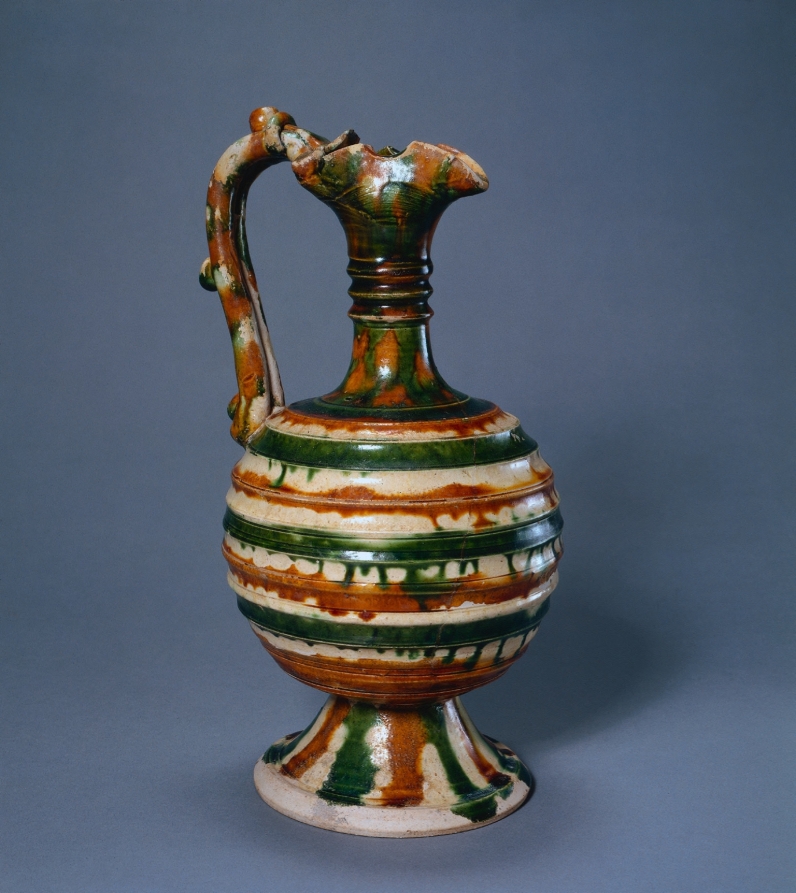
Ewer (700–750) is in the Cleveland Museum of Art collection.
The work and its context
The museum's open-access catalogue describes the work:
Many sancai or "three-color" lead-glazed wares-such as this ewerare notable for their heavy dependence on metalwork prototypes. Such polychrome glazed wares were intended for the tomb.
Object facts
- Title: Ewer
- Date: 700–750
- Culture: China, Tang dynasty (618-907)
- Type: Ceramic
- Technique: glazed earthenware, sancai (three-color ware)
- Dimensions: Diameter: 13.5 cm (5 5/16 in.); Overall: 27.3 cm (10 3/4 in.)
- Collection: China - Tang Dynasty
- Department: Chinese Art
- Accession number: 1987.148
Collection credit
The Severance and Greta Millikin Purchase Fund
View the collection record
See the museum's photographs and full catalogue entry. Catalogue text is reproduced from the Cleveland Museum of Art's open-access data, with HTML formatting removed. This object and its supplied image are designated CC0.
Sources
More in Lifestyle
Keep reading