Ewer (Fusatsugata Suibyō) (1200s): Art, History and Details
Ewer (Fusatsugata Suibyō) at the Cleveland Museum of Art: 1200s, bronze. Explore the work's context, creator attribution and collection history.
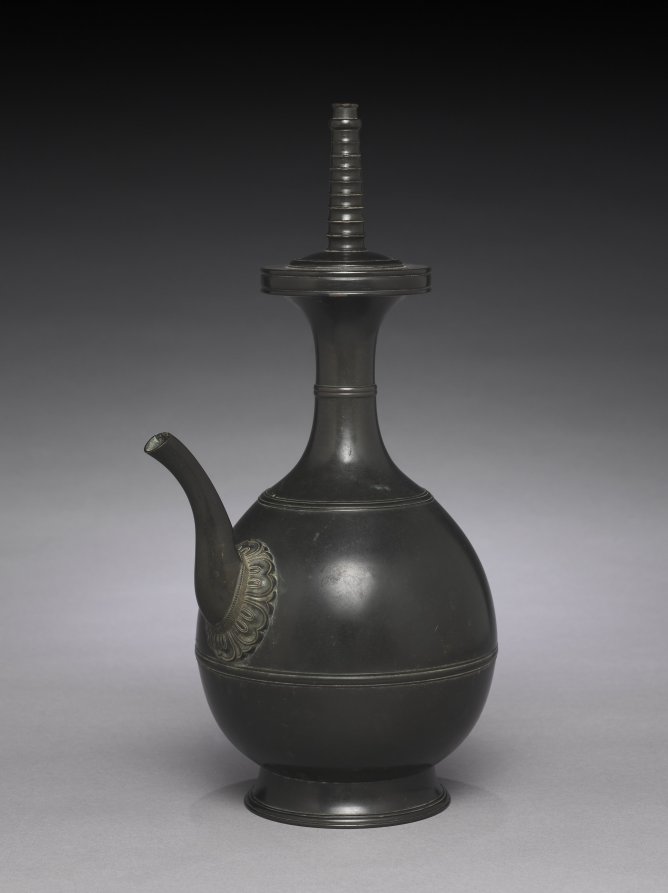
Ewer (Fusatsugata Suibyō) (1200s) is in the Cleveland Museum of Art collection.
The work and its context
The museum's open-access catalogue describes the work:
Ewers of this particular shape developed in Japan for use in Esoteric Buddhist communities, and are called fusatsu-shaped water pitchers. Unlike the ewers commonly used in rituals celebrated before the Buddha, this type is used for the purifying of monks’ hands with water at the start of a Dharma assembly focused on the recitation of the monastic code of conduct, and repentance for transgressions.
Object facts
- Title: Ewer (Fusatsugata Suibyō)
- Date: 1200s
- Culture: Japan, Kamakura period (1185–1333)
- Type: Metalwork
- Technique: bronze
- Dimensions: Overall: 34.9 cm (13 3/4 in.)
- Collection: Japanese Art
- Department: Japanese Art
- Accession number: 1970.78
Collection credit
James Parmelee Fund
View the collection record
See the museum's photographs and full catalogue entry. Catalogue text is reproduced from the Cleveland Museum of Art's open-access data, with HTML formatting removed. This object and its supplied image are designated CC0.
Sources
More in Lifestyle
Keep reading