Ewer (Suichu) (early 1600s): Art, History and Details
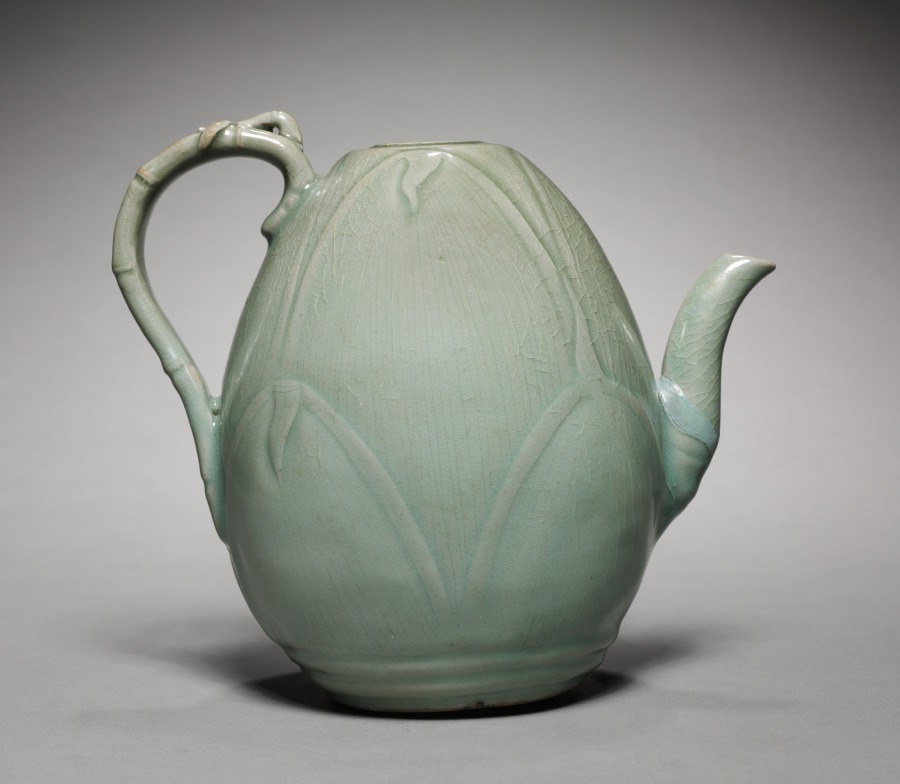
Ewer (Suichu) at the Cleveland Museum of Art: early 1600s, Glazed stoneware with iron oxide underglaze slip (Mino ware, Oribe type). Explore the work's context, creator attribution and collection history.
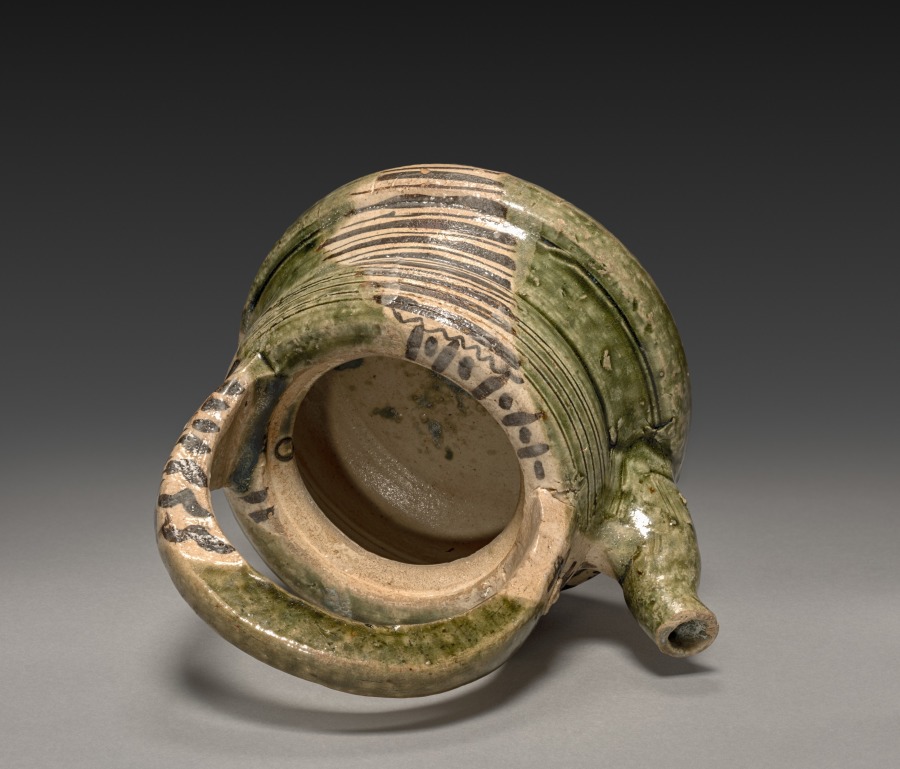
Ewer (Suichu) (early 1600s) is in the Cleveland Museum of Art collection.
The work and its context
The museum's open-access catalogue describes the work:
This ewer was made to replenish the jar that holds water for rinsing teabowls and filling the iron kettle at tea gatherings. Highly abstracted pine trees, cascading ivy, stripes, and grids make up the designs in underglaze iron oxide, while the overall surface alternates between a transparent glaze and a green glaze characteristic of some Oribe tea wares.
Object facts
- Title: Ewer (Suichu)
- Date: early 1600s
- Culture: Japan, Momoyama period (1573–1615)
- Type: Ceramic
- Technique: Glazed stoneware with iron oxide underglaze slip (Mino ware, Oribe type)
- Dimensions: Diameter of mouth: 12.7 cm (5 in.); Container: 21 cm (8 1/4 in.)
- Collection: Japanese Art
- Department: Japanese Art
- Accession number: 1958.336.a
Collection credit
The Norweb Collection
Further reading listed by the museum
- Lee, Sherman E. Japanese Decorative Style. Tokyo: Makoto Nakao, 1962.
- Lee, Sherman E. A History of Far Eastern Art. New York: H.N. Abrams, 1964.
- The Cleveland Museum of Art. Handbook of the Cleveland Museum of Art/1966. Cleveland, OH: The Cleveland Museum of Art, 1966.
View the collection record
See the museum's photographs and full catalogue entry. Catalogue text is reproduced from the Cleveland Museum of Art's open-access data, with HTML formatting removed. This object and its supplied image are designated CC0.
Sources
More in Lifestyle
Keep reading