Exotic Gold-patterned Silk (1360–1400): Art, History and Details
Exotic Gold-patterned Silk at the Cleveland Museum of Art: 1360–1400, silk, gold thread; a combination of two weaves, 2/1 twill and 1/3 twill (lampas). Explore the work's context, creator attribution and collection history.
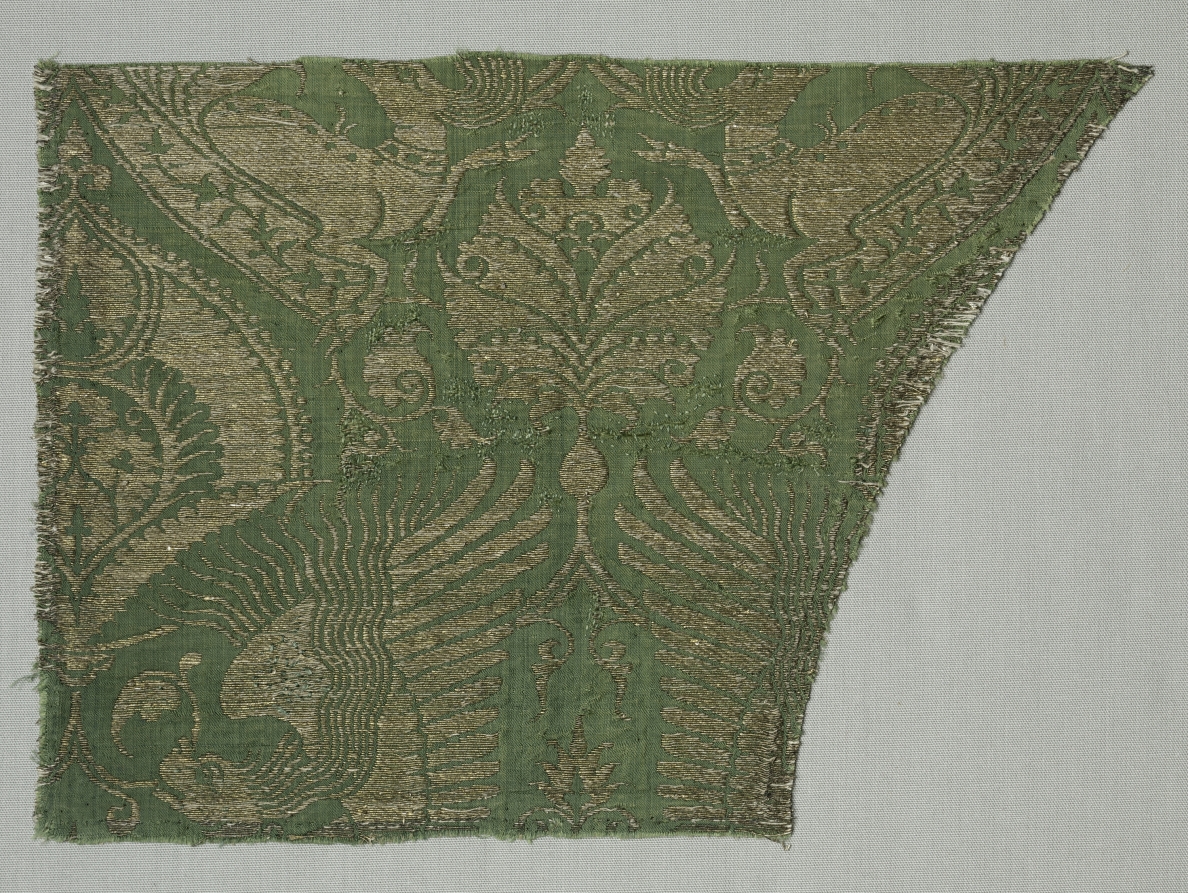
Exotic Gold-patterned Silk (1360–1400) is in the Cleveland Museum of Art collection.
The work and its context
The museum's open-access catalogue describes the work:
This superb quality silk with radiant gold thread on a rich green ground ranked among the most extravagant textiles woven in Italy during the 1300s. The Italian silk designer combined primarily exotic Chinese and Islamic motifs into the exceptionally dynamic pattern in the international style. Mythical beasts with flaming manes appear amid large palmette leaves. A chasuble in this fabric has survived, hidden during World War II behind a false wall in Saint Mary’s Church in Gdansk, Poland. A remarkably similar silk provides the lavish background in the museum’s painting John the Baptist by the Flemish painter Robert Campin. The display of such luxury continues the practice of using the finest items in the worship of God.
Object facts
- Title: Exotic Gold-patterned Silk
- Date: 1360–1400
- Culture: Italy, Venice
- Type: Textile
- Technique: silk, gold thread; a combination of two weaves, 2/1 twill and 1/3 twill (lampas)
- Dimensions: Overall: 21.6 x 31.1 cm (8 1/2 x 12 1/4 in.); Mounted: 30.5 x 39.4 cm (12 x 15 1/2 in.)
- Collection: Textiles
- Department: Textiles
- Accession number: 1954.69
Collection credit
Purchase from the J. H. Wade Fund
Further reading listed by the museum
- Wardwell, Anne E. "Flight of the Phoenix: Crosscurrents in Late Thirteenth- to Fourteenth-Century Silk Patterns and Motifs." The Bulletin of the Cleveland Museum of Art 74, no. 1 (1987): 2-35.
View the collection record
See the museum's photographs and full catalogue entry. Catalogue text is reproduced from the Cleveland Museum of Art's open-access data, with HTML formatting removed. This object and its supplied image are designated CC0.
Sources
More in Lifestyle
Keep reading