Falcon (c. 1770): Art, History and Details
Falcon at the Cleveland Museum of Art: c. 1770, Gum tempera and gold on paper. Explore the work's context, creator attribution and collection history.
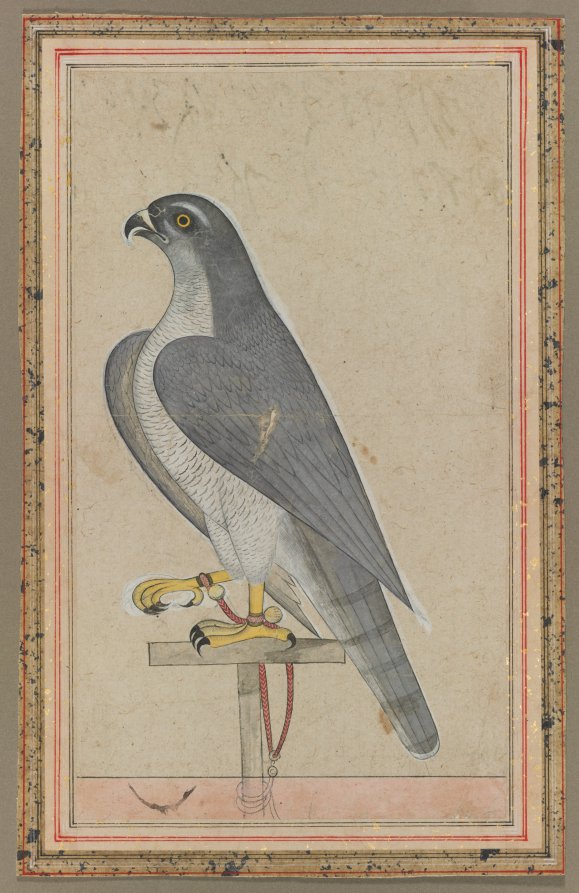
Falcon (c. 1770) is in the Cleveland Museum of Art collection.
The work and its context
The museum's open-access catalogue describes the work:
The imperial Mughal practice of keeping portraits of animals was adopted by art patrons and collectors in small states and kingdoms under the umbrella of the Mughals. Falconry, the sport of hunting small game with a bird of prey, was a popular activity among the highest ranks of Mughal royalty. The falcon depicted in this painting appears to be a peregrine. Cords with bells keep the trained hunting bird tethered to its roost.
Object facts
- Title: Falcon
- Date: c. 1770
- Culture: Northern India, Pahari kingdoms
- Type: Painting
- Technique: Gum tempera and gold on paper
- Dimensions: Image: 27.6 x 16 cm (10 7/8 x 6 5/16 in.); Overall: 31.6 x 19.8 cm (12 7/16 x 7 13/16 in.)
- Collection: Indian Art
- Department: Indian and Southeast Asian Art
- Accession number: 1968.42
A detail from the museum
Indian artists used white-out, white paint, to cover mistakes and make changes.
Collection credit
Edward L. Whittemore Fund
View the collection record
See the museum's photographs and full catalogue entry. Catalogue text is reproduced from the Cleveland Museum of Art's open-access data, with HTML formatting removed. This object and its supplied image are designated CC0.
Sources
More in Lifestyle
Keep reading