Female Figurine (c. 1200–900 BCE): Art, History and Details
Female Figurine at the Cleveland Museum of Art: c. 1200–900 BCE, earthenware with pigment. Explore the work's context, creator attribution and collection history.
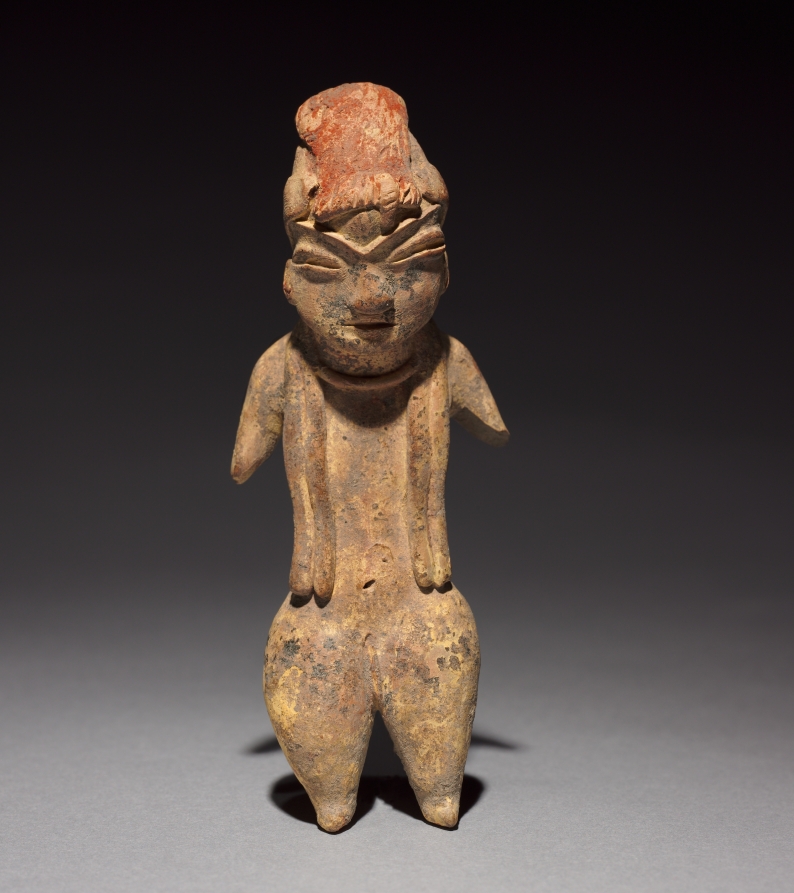
Female Figurine (c. 1200–900 BCE) is in the Cleveland Museum of Art collection.
The work and its context
The museum's open-access catalogue describes the work:
This ceramic figurine—in the style of Tlatilco, an early village site near Mexico City—depicts a nude female with an elaborate coiffure, attenuated arms, and the traces of mineral pigment. Since many figurines from the period depict females, modern interpreters usually connect them to fertility concerns. At Tlatilco, figurines were found in human burials that had been placed under the floors of homes.
Object facts
- Title: Female Figurine
- Date: c. 1200–900 BCE
- Culture: Mesoamerica, Central Mexico, Tlatilco
- Type: Sculpture
- Technique: earthenware with pigment
- Dimensions: Overall: 10.9 x 4.1 cm (4 5/16 x 1 5/8 in.)
- Collection: AA - Mesoamerica
- Department: Art of the Americas
- Accession number: 1990.144
A detail from the museum
Figurines were also made of perishable materials including wood, paper, cloth, rubber, and dough.
Collection credit
Gift of Mr. and Mrs. James C. Gruener
Further reading listed by the museum
- Young-Sánchez, Margaret. "The Gruener Collection of Pre-Columbian Art." The Bulletin of the Cleveland Museum of Art 79, no. 7 (1992): 234-75.
View the collection record
See the museum's photographs and full catalogue entry. Catalogue text is reproduced from the Cleveland Museum of Art's open-access data, with HTML formatting removed. This object and its supplied image are designated CC0.
Sources
More in Lifestyle
Keep reading