Female torso (1000s): Art, History and Details
Female torso at the Cleveland Museum of Art: 1000s, black chlorite. Explore the work's context, creator attribution and collection history.
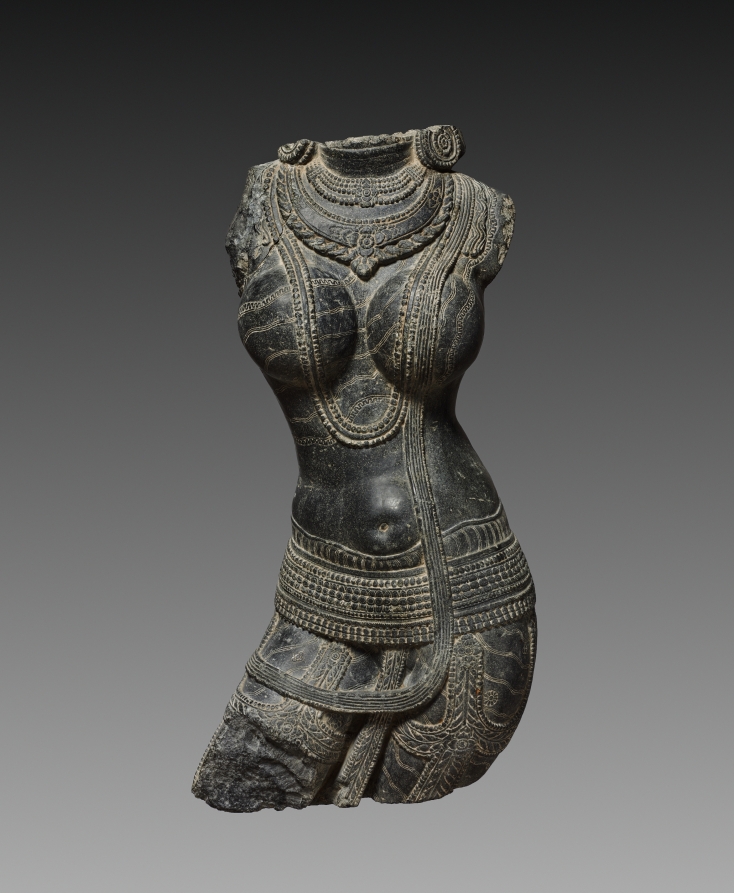
Female torso (1000s) is in the Cleveland Museum of Art collection.
The work and its context
The museum's open-access catalogue describes the work:
This life-size sculpture of a female figure was likely installed by a doorway or in an exterior niche of a Buddhist temple. Throughout the history of Indian art, voluptuous female figures have adorned Buddhist sanctuaries. Embodying the Indian ideal of female beauty, the form of the young mother with full breasts of milk personifies abundance, nourishment, and productivity—ideas that were considered auspicious and life affirming. Her copious jewels and valuable textiles also visually relate that the good karmic actions of venerating the Buddha and following his teachings will result in abundant good fortune.
Object facts
- Title: Female torso
- Date: 1000s
- Culture: Northeastern India, Pala dynasty (730-1197)
- Type: Sculpture
- Technique: black chlorite
- Dimensions: Overall: 89 x 44 x 19 cm (35 1/16 x 17 5/16 x 7 1/2 in.)
- Collection: Indian Art
- Department: Indian and Southeast Asian Art
- Accession number: 2011.146
Collection credit
Gift of Maxeen and John Flower in honor of Dr. Stanislaw Czuma
Further reading listed by the museum
- Franklin, David. The Cleveland Museum of Art - Director's choice. London: Scala Arts & Heritage Publishers Ltd, 2012.
- “Art of Asia Acquired by North American Museums, 2010-2011.” Archives of Asian Art 62 (2012): 105–153.
- Mann, C. Griffith, and Amy Bracken Sparks. "Acquisitions 2011." Cleveland Art: Cleveland Museum of Art Members Magazine 52, no. 2 (March/April 2012): 10–27.
View the collection record
See the museum's photographs and full catalogue entry. Catalogue text is reproduced from the Cleveland Museum of Art's open-access data, with HTML formatting removed. This object and its supplied image are designated CC0.
Sources
More in Lifestyle
Keep reading