Fibula (Pin) (400–200 BCE): Art, History and Details
Fibula (Pin) at the Cleveland Museum of Art: 400–200 BCE, gold. Explore the work's context, creator attribution and collection history.
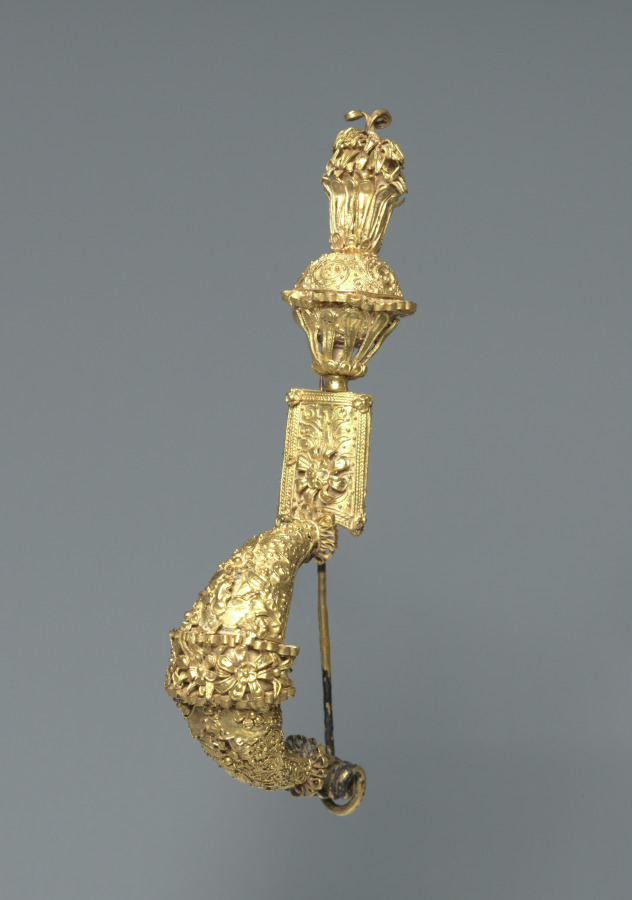
Fibula (Pin) (400–200 BCE) is in the Cleveland Museum of Art collection.
The work and its context
The museum's open-access catalogue describes the work:
This extravagant fibula, likely used to fasten garments, is decorated with gold rosettes and vines. An enormous leech-shaped bow and pin form the body of the fibula. A band of rosettes adorns the center of the bow. Above the bow, a gold plaque is adorned with an eight-petaled flower and palmette filigree. A gold bead, perhaps representing a pomegranate, tops the plaque. The bead is crowned with oblong petals and sprouting leaves.
Object facts
- Title: Fibula (Pin)
- Date: 400–200 BCE
- Culture: South Italy, Campania
- Type: Jewelry
- Technique: gold
- Dimensions: Overall: 8 cm (3 1/8 in.)
- Collection: GR - Greek
- Department: Greek and Roman Art
- Accession number: 1947.504
A detail from the museum
This fibula’s elaborate surface includes soldered gold wire and granulated spheres.
Collection credit
John L. Severance Fund
Further reading listed by the museum
- Galerie Fischer. Griechische, etruskische und römische Altertümer: Vasen, Terrakotten, Bronzen (Ausgrabungen von Boscoreale), Silberfund, Gläser, Waffen, pompejanische Fresken, Schmuck, Mumienporträt, Goldmünzen; Marmorfiguren und Reliefs (Venus Anadyomene; Alexander-Schlactrelief usw.); römische Tische, Sarkophag und anderes antikes Kunstgewerbe. 1936.
- The Brummer Gallery Records. Cloisters (Museum), n.d.
- Neugass, Fritz. "Kostbarer Schmuck der Alexandreneschen Zeit," Die Weltkunst (January 15, 1966).
View the collection record
See the museum's photographs and full catalogue entry. Catalogue text is reproduced from the Cleveland Museum of Art's open-access data, with HTML formatting removed. This object and its supplied image are designated CC0.
Sources
More in Lifestyle
Keep reading