Figure of Budai or Hotei with Jar (c. 1735–40): Art, History and Details
Figure of Budai or Hotei with Jar at the Cleveland Museum of Art: c. 1735–40, Tin-glazed soft-paste porcelain with enamel decoration. Explore the work's context, creator attribution and collection history.
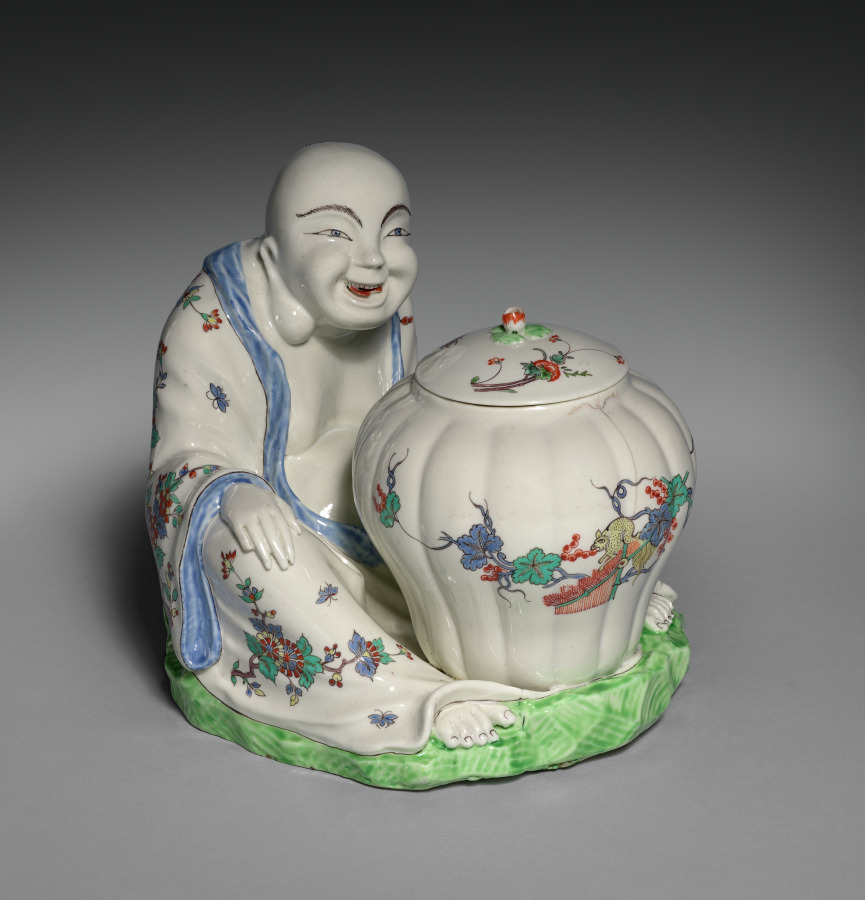
Figure of Budai or Hotei with Jar (c. 1735–40) is in the Cleveland Museum of Art collection. The museum's creator attribution is Chantilly Porcelain Factory (French).
The work and its context
The museum's open-access catalogue describes the work:
The production of decorative figures like this one, referred to as magots or pagodes in European texts, was the result of an 18th-century European interest in Chinese and Japanese culture and porcelain. Budai, pronounced Hotei in Japanese, was a semilegendary Chinese monk known in Japan through the transmission of Chan Bhuddism. This figure’s decoration with multicolor overglaze enamels on a milky-white is typical of Japanese Kakiemon style.
Object facts
- Title: Figure of Budai or Hotei with Jar
- Date: c. 1735–40
- Creator attribution: Chantilly Porcelain Factory (French)
- Culture: France, Chantilly
- Type: Ceramic
- Technique: Tin-glazed soft-paste porcelain with enamel decoration
- Dimensions: Overall: 17.2 cm (6 3/4 in.)
- Collection: Decorative Arts
- Department: Decorative Art and Design
- Accession number: 1947.62
A detail from the museum
In 1735, the Chantilly factory was given a 25-year royal privilege for the manufacture of objects that imitated Japanese porcelain.
Collection credit
Grace Rainey Rogers Fund
Further reading listed by the museum
- Foote, Helen S. "French Soft-Paste Porcelain." The Bulletin of The Cleveland Museum of Art 34 (December 1947).
- Foote, Helen S. "Soft-Paste Porcelain of France." The Art Quarterly XI (Autumn 1948).
- Ballu, Nicole. "Influence de l'Extrême-Orient sur le style de Chantilly au XVIIIe siècle." Cahiers de la céramique et des arts du feu: Revue trimestrielle 1958: 100-112.
View the collection record
See the museum's photographs and full catalogue entry. Catalogue text is reproduced from the Cleveland Museum of Art's open-access data, with HTML formatting removed. This object and its supplied image are designated CC0.
Sources
More in Lifestyle
Keep reading