Figure Pair of the Dancer (La Danseuse) and the Bagpiper (Le Joueur de Musette) (1748–52): Art, History and Details
Figure Pair of the Dancer (La Danseuse) and the Bagpiper (Le Joueur de Musette) at the Cleveland Museum of Art: 1748–52, unglazed soft-paste porcelain (biscuit porcelain). Explore the work's context, creator attribution and collection histo
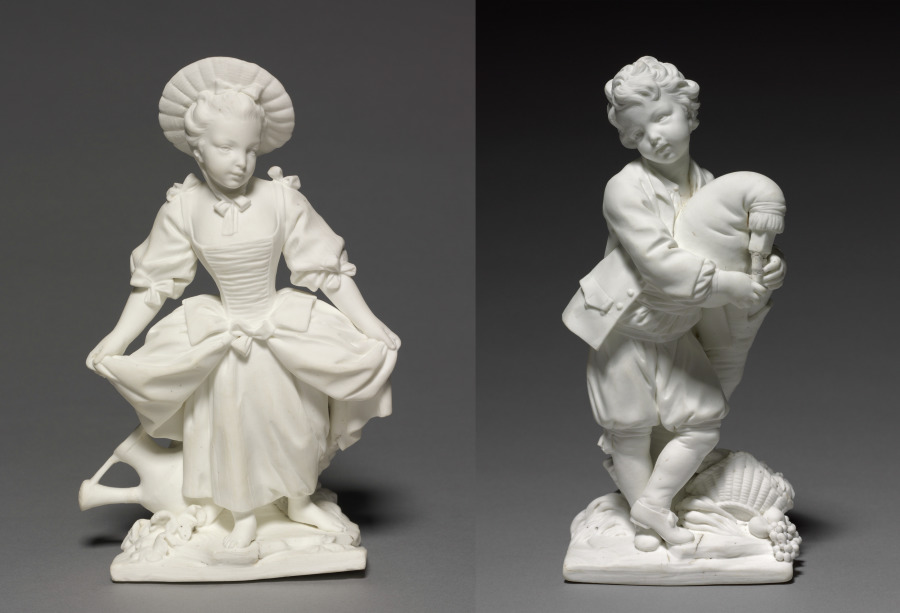
Figure Pair of the Dancer (La Danseuse) and the Bagpiper (Le Joueur de Musette) (1748–52) is in the Cleveland Museum of Art collection. The museum's creator attribution is Vincennes Porcelain Factory (France, 1740–56); Pierre Blondeau (French); François Boucher (French, 1703–1770).
The work and its context
The museum's open-access catalogue describes the work:
In the mid-18th century, the designs of reputed painter François Boucher were regularly reproduced at the Vincennes factory as figures or paintings on porcelain. A series of eight children designed by Boucher were referred to in factory records as the Enfants de Boucher (children of Boucher) and regularly reproduced. The depictions of these barefoot children in peasant attire engaged in pastoral pursuits represent the virtuous simplicity the 18th-century French elite ascribed to representations of rural life.
Object facts
- Title: Figure Pair of the Dancer (La Danseuse) and the Bagpiper (Le Joueur de Musette)
- Date: 1748–52
- Creator attribution: Vincennes Porcelain Factory (France, 1740–56); Pierre Blondeau (French); François Boucher (French, 1703–1770)
- Culture: France, Vincennes
- Type: Ceramic
- Technique: unglazed soft-paste porcelain (biscuit porcelain)
- Collection: Decorative Arts
- Department: Decorative Art and Design
- Accession number: 1961.10
A detail from the museum
Unglazed porcelain figures were a long-lasting alternative to the decorative sugar sculptures displayed alongside intricately designed 18th-century French dinner services.
Collection credit
The Norweb Collection
Further reading listed by the museum
- The Cleveland Museum of Art. Handbook of the Cleveland Museum of Art/1966. Cleveland, OH: The Cleveland Museum of Art, 1966.
- The Cleveland Museum of Art. Handbook of the Cleveland Museum of Art/1969. Cleveland, OH: The Cleveland Museum of Art, 1969.
View the collection record
See the museum's photographs and full catalogue entry. Catalogue text is reproduced from the Cleveland Museum of Art's open-access data, with HTML formatting removed. This object and its supplied image are designated CC0.
Sources
More in Lifestyle
Keep reading