Figure Pendant (900–1550): Art, History and Details
Figure Pendant at the Cleveland Museum of Art: 900–1550, cast gold. Explore the work's context, creator attribution and collection history.
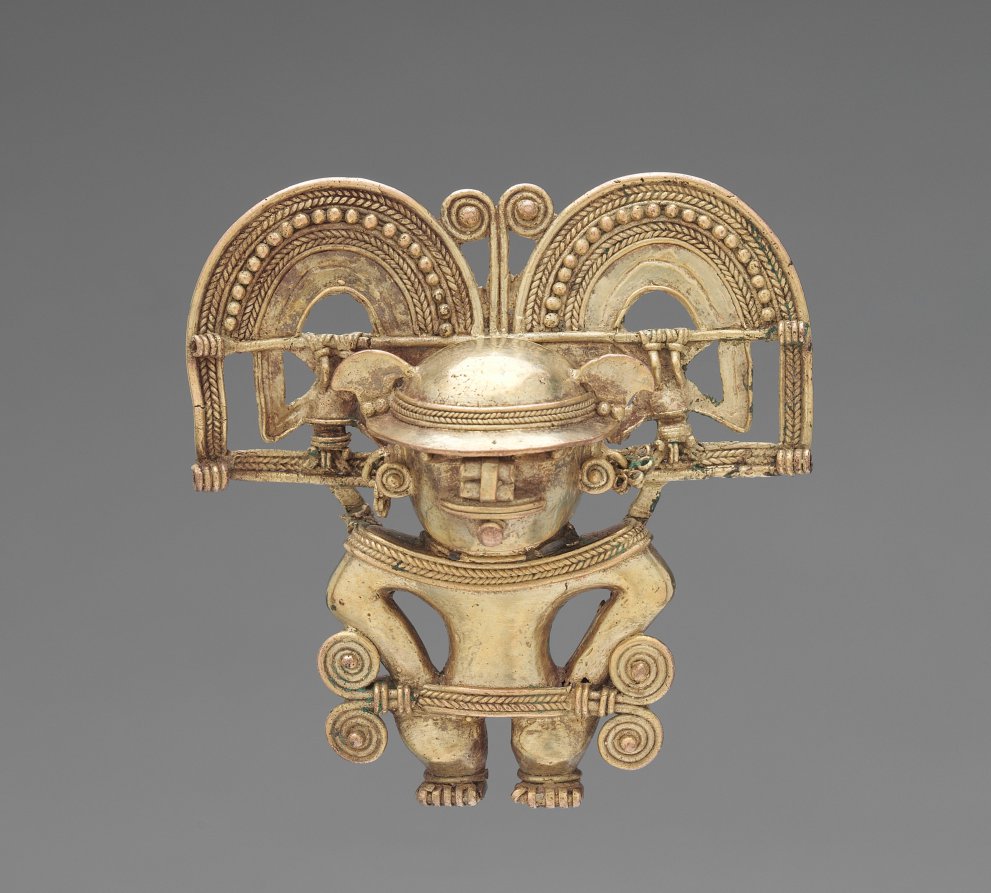
Figure Pendant (900–1550) is in the Cleveland Museum of Art collection.
The work and its context
The museum's open-access catalogue describes the work:
Tairona-style pendants are among the most spectacular of all ancient American gold ornaments, in part because of the detail achieved with lost-wax casting. The traits of the figure pendant include a lower lip ornament and a headdress in which two bats hang upside down. Although called caciques (chieftains)-that is, ruler portraits-the meaning of such figures is not well understood. Bird imagery was important in the isthmian region in ancient times and remains so today. For instance, among the modern Bribri of Costa Rica, the principal creator deity (Sibo) takes the form of a buzzard or kite who wears a collar. Collars are standard features of ancient bird pendants, like the one shown here.
Object facts
- Title: Figure Pendant
- Date: 900–1550
- Culture: Colombia, Tairona
- Type: Metalwork
- Technique: cast gold
- Dimensions: Overall: 6.2 x 6.1 x 2.5 cm (2 7/16 x 2 3/8 x 1 in.)
- Collection: AA - Intermediate Region
- Department: Art of the Americas
- Accession number: 1998.3
Collection credit
John L. Severance Fund
Further reading listed by the museum
- Cleveland Museum of Art, “Painting by 18th-century Italian Master Gaetano Gandolfi among Works Added to CMA Collection,” March 24, 1998, Cleveland Museum of Art Archives.
View the collection record
See the museum's photographs and full catalogue entry. Catalogue text is reproduced from the Cleveland Museum of Art's open-access data, with HTML formatting removed. This object and its supplied image are designated CC0.
Sources
More in Lifestyle
Keep reading