Figurine (300–100 BCE): Art, History and Details
Figurine at the Cleveland Museum of Art: 300–100 BCE, terracotta. Explore the work's context, creator attribution and collection history.
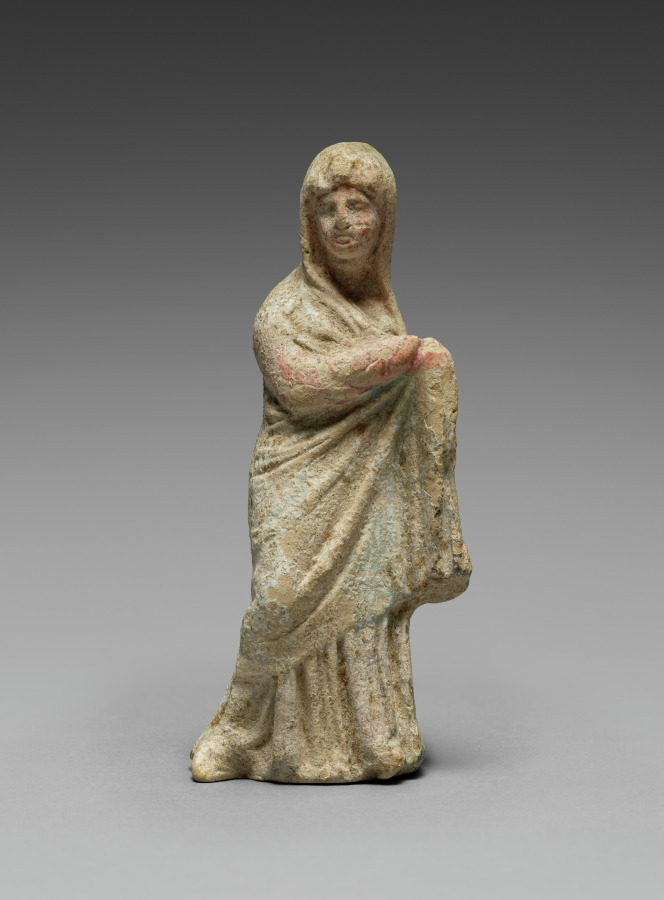
Figurine (300–100 BCE) is in the Cleveland Museum of Art collection.
The work and its context
The museum's open-access catalogue describes the work:
Terracotta figurines like this one were popular throughout the ancient Mediterranean. This statuette takes the shape of a woman wearing a cloak or himation that twists around her form as she pulls it toward her left shoulder. Pigment is preserved in patches of red on the fabric over her arm. The figurine is mold-made, but only the front of the figure is modeled.
Object facts
- Title: Figurine
- Date: 300–100 BCE
- Culture: South Italy, Tarentum
- Type: Sculpture
- Technique: terracotta
- Dimensions: Overall: 11.5 cm (4 1/2 in.)
- Collection: GR - Greek
- Department: Greek and Roman Art
- Accession number: 1951.536
A detail from the museum
In ancient Greek art and literature, veiling the head or face was often a sign of αίδως (aidos), modesty or shame.
Collection credit
Purchase from the J. H. Wade Fund
Further reading listed by the museum
- Signorelli, Angelo, and Giorgio Fallani. Raccolta archeologica del Prof. Dott. Angelo Signorelli. Roma: P. & P. Santamaria, 1951.
View the collection record
See the museum's photographs and full catalogue entry. Catalogue text is reproduced from the Cleveland Museum of Art's open-access data, with HTML formatting removed. This object and its supplied image are designated CC0.
Sources
More in Lifestyle
Keep reading