Figurine Head Fragment (150–350 CE): Art, History and Details
Figurine Head Fragment at the Cleveland Museum of Art: 150–350 CE, ceramic, pigment. Explore the work's context, creator attribution and collection history.
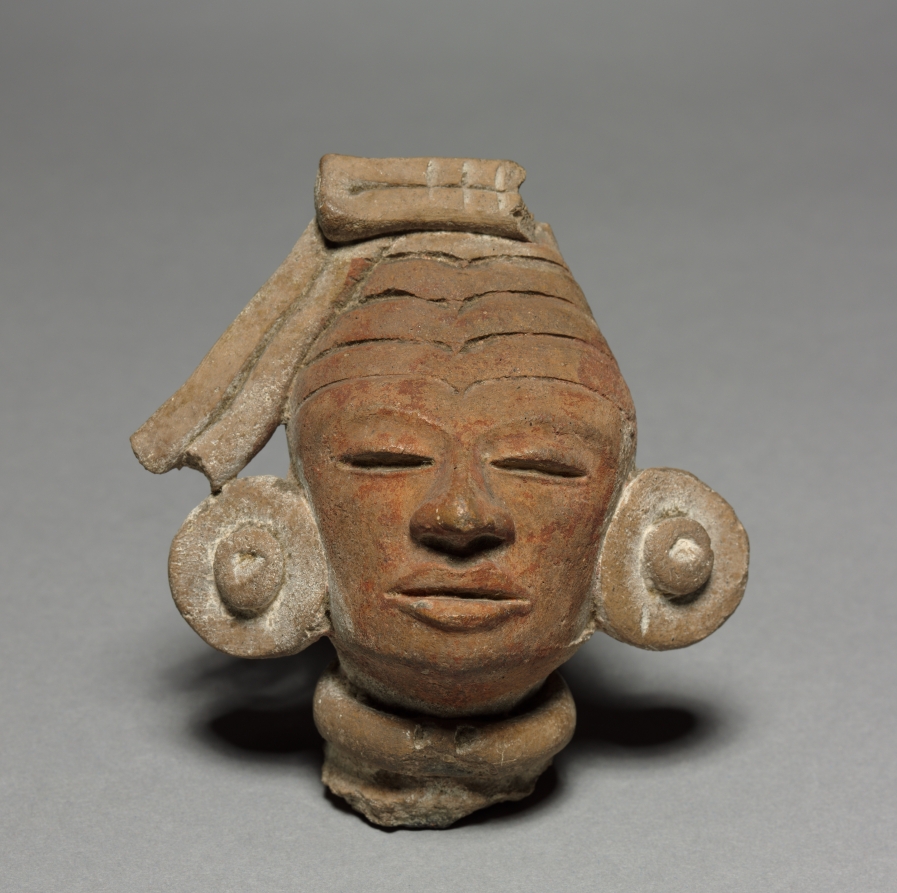
Figurine Head Fragment (150–350 CE) is in the Cleveland Museum of Art collection.
The work and its context
The museum's open-access catalogue describes the work:
The earliest Teotihuacan figurines are hand modeled, while later specimens were produced with molds. This exceptionally large example has a mold-made head, with facial features carefully retouched by hand. Earthenware figurines were made in great abundance throughout Teotihuacan's history, and may have been used in household religious rituals.
Object facts
- Title: Figurine Head Fragment
- Date: 150–350 CE
- Culture: Central Mexico, Teotihuacán, Classic period
- Type: Ceramic
- Technique: ceramic, pigment
- Dimensions: Diameter: 5.4 cm (2 1/8 in.); Overall: 9.2 x 8.5 cm (3 5/8 x 3 3/8 in.)
- Collection: AA - Mesoamerica
- Department: Art of the Americas
- Accession number: 1921.1709
Collection credit
Gift of Edward B. Greene
View the collection record
See the museum's photographs and full catalogue entry. Catalogue text is reproduced from the Cleveland Museum of Art's open-access data, with HTML formatting removed. This object and its supplied image are designated CC0.
Sources
More in Lifestyle
Keep reading