Figurine Plaque (c. 300 BCE–200 CE): Art, History and Details
Figurine Plaque at the Cleveland Museum of Art: c. 300 BCE–200 CE, hammered and embossed gold-copper alloy. Explore the work's context, creator attribution and collection history.
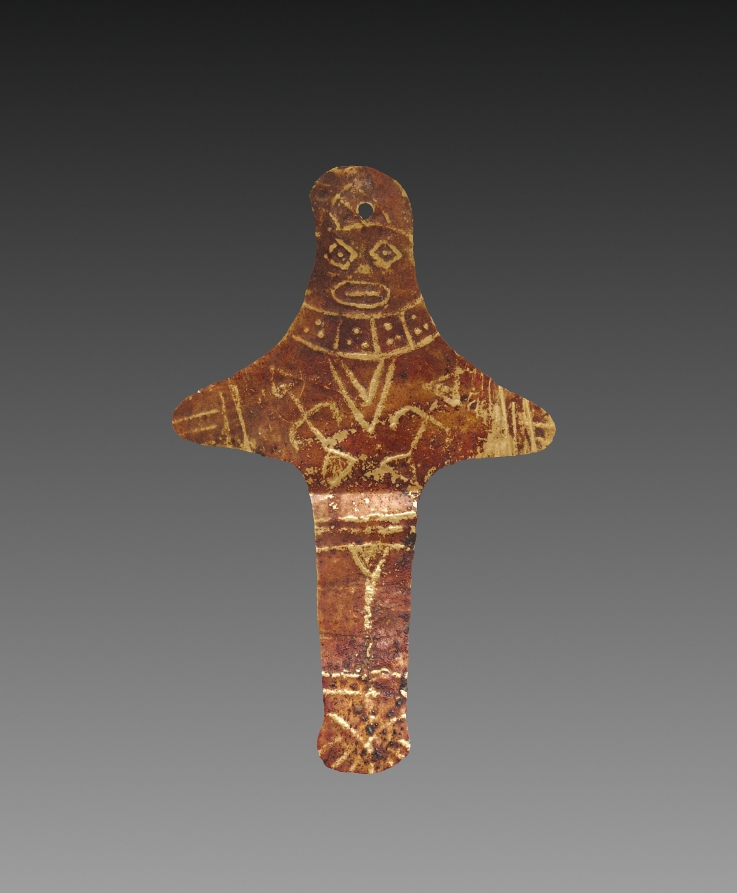
Figurine Plaque (c. 300 BCE–200 CE) is in the Cleveland Museum of Art collection.
The work and its context
The museum's open-access catalogue describes the work:
This small metal ornament represents a human figure wearing a cap, a tunic decorated with bird images, and a necklace of orange-pink spondylus shell sections. Such necklaces are found in Paracas mummy bundles, and are frequently represented in Paracas embroidered images. Spondylus shell does not grow in the cold water off the coast of Peru, and had to be imported hundreds of miles from what is now Ecuador. Virtually all ancient Peruvian cultures treasured spondylus shell for its color and rarity, and as a symbol of fertility.
Object facts
- Title: Figurine Plaque
- Date: c. 300 BCE–200 CE
- Culture: Peru, South Coast, Paracas, with modern etched enhancement(?)
- Type: Jewelry
- Technique: hammered and embossed gold-copper alloy
- Dimensions: Overall: 6.8 x 4.2 cm (2 11/16 x 1 5/8 in.)
- Collection: AA - Andes
- Department: Art of the Americas
- Accession number: 1940.512
A detail from the museum
Tumbaga is an alloy made by blending gold with copper, which may give the gold a rosy hue.
Collection credit
The Norweb Collection
View the collection record
See the museum's photographs and full catalogue entry. Catalogue text is reproduced from the Cleveland Museum of Art's open-access data, with HTML formatting removed. This object and its supplied image are designated CC0.
Sources
More in Lifestyle
Keep reading