Fishing Canoe Prow (1800s): Art, History and Details
Fishing Canoe Prow at the Cleveland Museum of Art: 1800s, wood with haliotis (pearl) shell inlay. Explore the work's context, creator attribution and collection history.
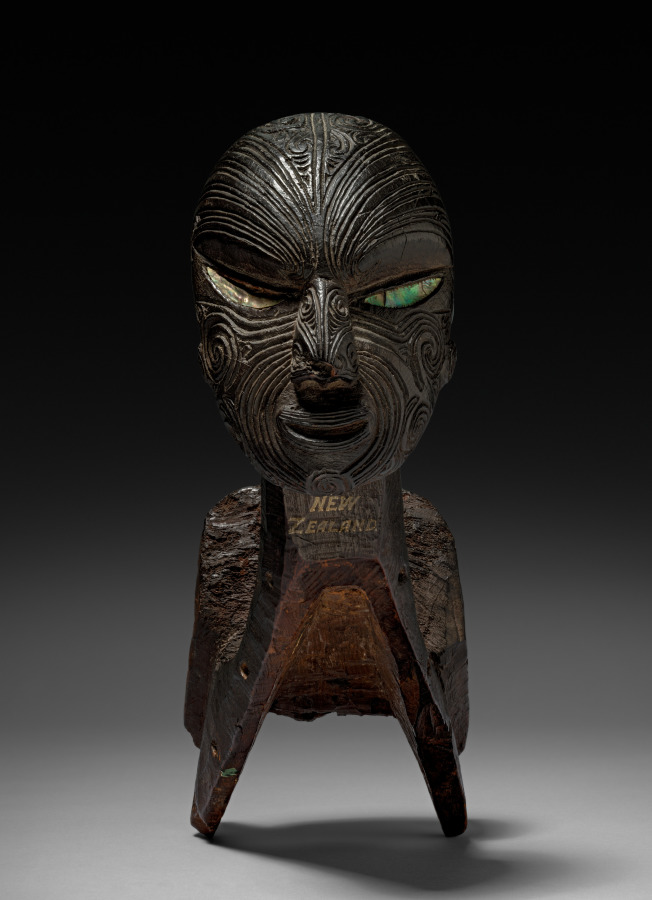
Fishing Canoe Prow (1800s) is in the Cleveland Museum of Art collection.
The work and its context
The museum's open-access catalogue describes the work:
Intricate surface patterning characterizes Maori wood carvings. The swirls and spirals covering the face on this canoe prow replicate traditional facial tattoo patterns. Similar designs were used for post and gable figures that adorned both dwellings and compounds.
Object facts
- Title: Fishing Canoe Prow
- Date: 1800s
- Culture: Polynesia, New Zealand, Maori people, 19th century
- Type: Sculpture
- Technique: wood with haliotis (pearl) shell inlay
- Dimensions: Overall: 35.3 cm (13 7/8 in.)
- Collection: Oceanic Art
- Department: Oceania
- Accession number: 1967.231
Collection credit
The Mary Spedding Milliken Memorial Collection, Gift of William Mathewson Milliken
Further reading listed by the museum
- Sims, Lowery Stokes. The Persistence of Geometry: Form, Content, and Culture in the Collection of the Cleveland Museum of Art. Cleveland: Cleveland Museum of Art, 2006.
View the collection record
See the museum's photographs and full catalogue entry. Catalogue text is reproduced from the Cleveland Museum of Art's open-access data, with HTML formatting removed. This object and its supplied image are designated CC0.
Sources
More in Lifestyle
Keep reading