Five Guineas: George II (obverse); Shield of Arms (reverse) (1731): Art, History and Details
Five Guineas: George II (obverse); Shield of Arms (reverse) at the Cleveland Museum of Art: 1731, gold. Explore the work's context, creator attribution and collection history.
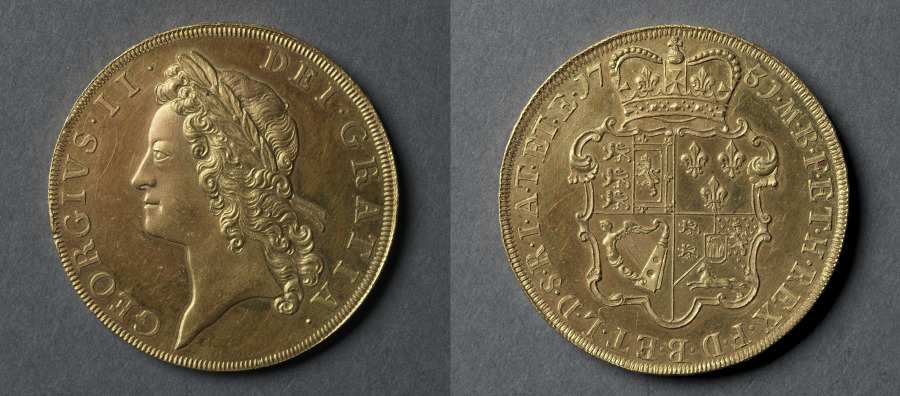
Five Guineas: George II (obverse); Shield of Arms (reverse) (1731) is in the Cleveland Museum of Art collection.
The work and its context
The museum's open-access catalogue describes the work:
This coin was probably struck as a proof. Under George II the same denominations of coinage appeared as in previous reigns since the coinage reform of 1662. The elephant, or elephant and castle no longer appear on the obverse. In 1729 the initials E I C appeared below the head on some of the five guineas, and on the guinea and half guinea of other dates. These signify that the coins were struck for the East India Company, or from gold sent by that company for coining at the Royal Mint.
Object facts
- Title: Five Guineas: George II (obverse); Shield of Arms (reverse)
- Date: 1731
- Culture: England, George II, 1727-1760
- Type: Coins
- Technique: gold
- Dimensions: Diameter: 3.7 cm (1 7/16 in.)
- Collection: MED - Numismatics
- Department: Medieval Art
- Accession number: 1969.207
A detail from the museum
The shield shows from top right to bottom left: England and Scotland, France, Ireland, and the Electorate.
Collection credit
The Norweb Collection
Further reading listed by the museum
- Cleveland Museum of Art, and Emery May Norweb. English Gold Coins, Ancient to Modern Times, On Loan to the Cleveland Museum of Art from the Norweb Collection. [Catalog. 1968.
View the collection record
See the museum's photographs and full catalogue entry. Catalogue text is reproduced from the Cleveland Museum of Art's open-access data, with HTML formatting removed. This object and its supplied image are designated CC0.
Sources
More in Lifestyle
Keep reading