Floor Mosaic Panel: Grape Harvester with Peacock (400s): Art, History and Details
Floor Mosaic Panel: Grape Harvester with Peacock at the Cleveland Museum of Art: 400s, marble tesserae. Explore the work's context, creator attribution and collection history.
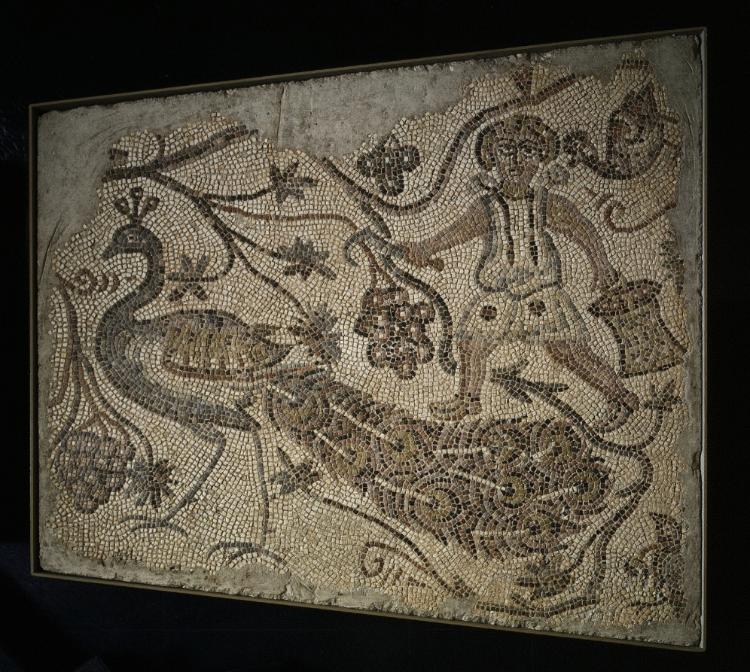
Floor Mosaic Panel: Grape Harvester with Peacock (400s) is in the Cleveland Museum of Art collection.
The work and its context
The museum's open-access catalogue describes the work:
This group of mosaics may be from a church at Maaut El Naaman in northern Syria. The panel depicting Adam and Eve includes a Greek inscription that translates as: "And they ate, [and they] were made naked," from the book of Genesis (3:7–8). It is possible that the mosaic belonged to a pavement illustrating the Garden of Eden. The Grape Harvester with a Peacock also conveys well-known Christian themes. The grapes represent the Eucharistic wine and thus the blood of Christ, while the peacock was a symbol of immortality.
Object facts
- Title: Floor Mosaic Panel: Grape Harvester with Peacock
- Date: 400s
- Culture: Byzantium, Northern Syria, Byzantine period, 5th century
- Type: Mosaic
- Technique: marble tesserae
- Dimensions: Overall: 133.5 x 144.8 cm (52 9/16 x 57 in.)
- Collection: MED - Byzantine
- Department: Medieval Art
- Accession number: 1969.112
Collection credit
John L. Severance Fund
View the collection record
See the museum's photographs and full catalogue entry. Catalogue text is reproduced from the Cleveland Museum of Art's open-access data, with HTML formatting removed. This object and its supplied image are designated CC0.
Sources
More in Lifestyle
Keep reading